
Soy Under EUDR Rules: What Documents Are Required and Why Unverified Batches Must Not Be Mixed


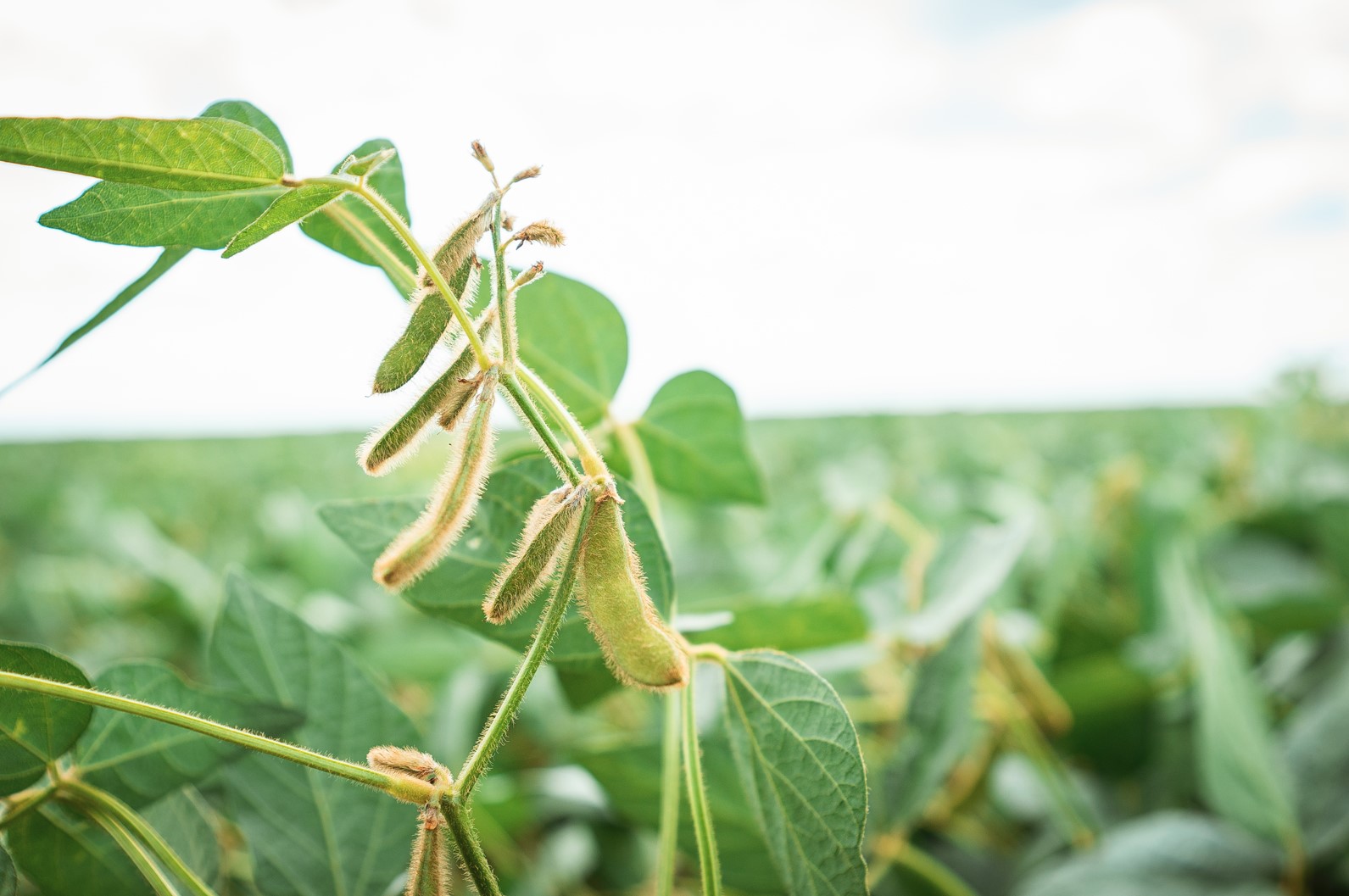
In Ukraine, 53% of the soybean area has already been harvested, yielding 1.89 MMT of the new crop. “While the harvest is still underway, producers should already be segregating their soybeans to ensure that the new crop complies with EUDR requirements,” urged Oksana Prosolenko, founder and director of I.P. Cert, during a recent Zoom call for ASAP Agri’s premium clients.
The EUDR topic has resurfaced every autumn for several years now, yet hopes that its implementation will be postponed have persisted until the very last moment. This year, however, there have been almost no objections from market participants suggesting that anyone is still unprepared. We are therefore preparing for the EUDR to come into effect as scheduled: from 30 December 2026 for large and medium-sized companies, and from 30 June 2027 for small and micro-enterprises in the EU.
75% of Exports — Too Much to Risk by Waiting
For Ukraine’s soybean market, preparing for the EUDR is directly linked to retaining buyers. The EU accounts for more than 75% of Ukraine’s exports of soybeans and soybean products. Soybean oil remains particularly dependent on European demand: under current market conditions, the EU is effectively the only market available to Ukrainian suppliers of this product.

Once the requirements come into force, documentation issues or an inability to verify the origin of the raw material could effectively shut suppliers out of the EU market. A lower price cannot compensate buyers for the lack of evidence demonstrating compliance.
A Certificate Is No Substitute for Due Diligence
One of the main misconceptions surrounding the EUDR is the expectation that simply hiring a consultant or certification company and obtaining the required document will be enough. However, no standalone EUDR certificate exists that automatically confirms compliance with all the requirements.
“Suppliers need to understand that products that do not meet the requirements cannot simply be sold to the EU at a discount. European buyers will not be able to purchase them. Compliance will determine access to the market,” Oksana Prosolenko stressed.
The EUDR is an EU regulation covering seven commodity groups. For Ukraine’s soybean sector, the relevant products are soybeans, soybean oil, soybean meal and soybean hulls. According to the expert, lecithin and soy protein concentrate (SPC) are not covered by these requirements.
The primary responsibility for conducting due diligence lies with the operator that first places the product on the EU market. For Ukrainian exporters, this is usually the European buyer. However, the buyer cannot carry out the due diligence process without information from the producer, trader and processor.
Three things must be demonstrated: that the product is not linked to deforestation, that it was produced legally, and that it is physically traceable throughout the supply chain. An auditor’s report or assistance from a consultant can facilitate the preparation process, but neither replaces the evidence required in each of these areas.
ADM Is Already Asking Questions — Who’s Next?
For some Ukrainian suppliers, the EUDR has already translated into specific requests from buyers.
“As far as I know, ADM and Bunge have already started sending out relevant requests, at least in Ukraine,” Prosolenko noted.
However, suppliers should not expect a single standard set of documents that applies to all buyers. One buyer may request a self-declaration of compliance with applicable legislation, while another may require a multi-page questionnaire accompanied by supporting documents. The scope of these requests will depend on each company’s internal risk management system and due diligence procedures.
Large Ukrainian agricultural holdings and processors began preparing earlier, including through the working group of the Ukrainian Agribusiness Club (UCAB). Having their own digitised data makes the process easier. Collecting information from independent farmers, however, is considerably more challenging: some producers still do not understand the purpose of these requests or are reluctant to share data about their farms.
According to Prosolenko, awareness of the regulation remains low even among small and medium-sized producers. For traders, this means additional work with suppliers before an export consignment can be assembled.
Field Mapping — The New Ticket to the EU
Preparing for EUDR compliance starts with verifying the origin of the soybeans. Buyers must obtain geolocation data for the plots of land where the crop was grown. If a trader sources soybeans from several farms, the information must be collected across the entire supply chain, not just from its direct supplier.

According to Prosolenko, without this data, the operator will be unable to properly register the consignment in the EU information system. The system uses the GeoJSON format for uploading geolocation data. Some buyers may also accept KML files from suppliers, so the technical requirements should be agreed upon in advance.
However, a map alone is not enough. It is also necessary to verify that the production is not linked to deforestation. The key cut-off date under the regulation is 31 December 2020: the product must originate from land that has not been subject to deforestation after that date. Documents proving the legal right to use the land do not replace this check.
Specialised services can be used for this analysis, or companies can conduct it in-house if they have specialists in geospatial data. During the discussion, Prosolenko mentioned FieldTrace and the Donau Soja tool, as well as the practices of large companies that work with official forest map layers.
Some of the workload may also be reduced by an additional module being developed for Ukraine’s State Agrarian Register (SAR), as Prosolenko explained. However, potential verification through the SAR does not eliminate the need to provide geolocation data and separately demonstrate that production was legal.
Mixing Soybean Batches Could Shut Suppliers Out of the Market
The most urgent task must be addressed during the harvest itself. Soybeans from verified plots need to be stored separately from produce whose origin has not yet been verified or is still in question. This also applies to farms that do not yet have a contract and plan to sell their crop only in winter or spring.
“If such products are mixed during harvesting or storage, the entire batch in the warehouse will become non-compliant,” the expert warned.
For processors, traceability of raw materials is equally critical. It is not possible to process a mixture of verified and unverified soybeans and then calculate what proportion of the resulting oil should be considered EUDR-compliant. Raw materials used to produce goods intended for the EU market must have a verified origin and demonstrably meet the requirements.
Relying on selling the entire crop before the regulation comes into force also carries risks. Prosolenko pointed to logistical disruptions that could delay even shipments scheduled for early December. Decisions on verifying and segregating batches therefore need to be made during the harvest itself.
Documents Must Be Collected Before Payment
If a farmer sells their own soybeans and has kept them segregated from the outset, some of the documentation could theoretically be prepared later. Farms generally have access to information about their own fields and farming operations. For traders purchasing from other producers, however, postponing data collection is far riskier.
“The requirement to provide information and the necessary documents should be included in the contract terms, and the documents should be collected before payment is made. Once the contract has been paid, obtaining additional documents can be extremely difficult,” Prosolenko explained.
In addition to geolocation data, buyers will be interested in whether production complies with Ukrainian law. This includes, in particular, land-use rights, environmental requirements, biodiversity protection, human rights, labour conditions, and tax and anti-corruption rules. A formal declaration may not be sufficient: the operator has the right to request supporting evidence.
Documentation is also required after the delivery has been completed. Suppliers should expect contractual requirements to retain records for five years and make them available for inspection. If an audit takes place two or three years later, they will still need to demonstrate the origin of the goods and prove compliance with the requirements.
Why Buyers Won’t Want to Take the Risk
For an EU operator, incomplete data creates a financial risk. The regulation requires the maximum fine applicable to legal entities under national law to amount to at least 4% of their total annual EU-wide turnover in the financial year preceding the decision to impose the fine. The withdrawal of the non-compliant consignment from the market also applies.
That is why the importer will assess whether the evidence provided is sufficient to accept the goods. According to Prosolenko, if the documentation does not allow the buyer to properly assess the risks, they may simply refuse to purchase the goods. Demand for soybeans alone does not guarantee that a buyer will agree to accept a shipment with unverified origins.
Will Prepared Suppliers Earn a Premium?
Uneven levels of preparedness among global exporters could create additional opportunities for Ukraine. According to Prosolenko, Brazil and Argentina are not yet fully prepared for the new requirements. Some US farmers are also reluctant to share data with commercial partners, agreeing to disclose it only when requested by the competent authorities.
If this limits the supply that European buyers can accept under EUDR rules, they will look for alternative suppliers. Ukrainian companies with established traceability systems and a complete set of supporting evidence could gain a competitive advantage.
Oksana Prosolenko told ASAP Agri premium subscribers exclusively what premium Ukrainian exporters could earn for EUDR-compliant soybeans and soybean products.
