Kostiantyn Sobol: The Threat to Shipping Is No Longer Limited to Ukrainian Waters



Photo by: Latifundist.com
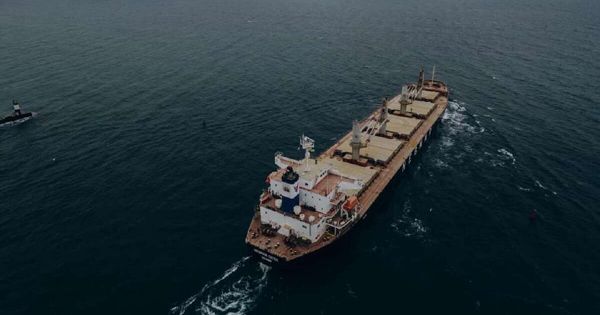
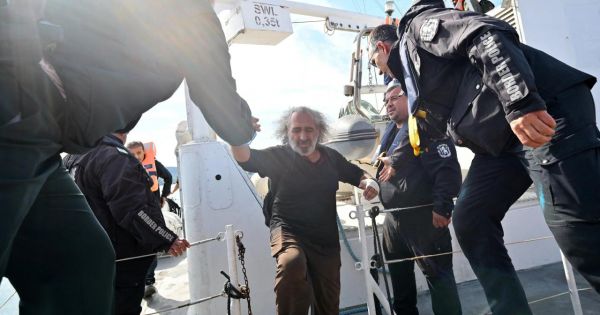
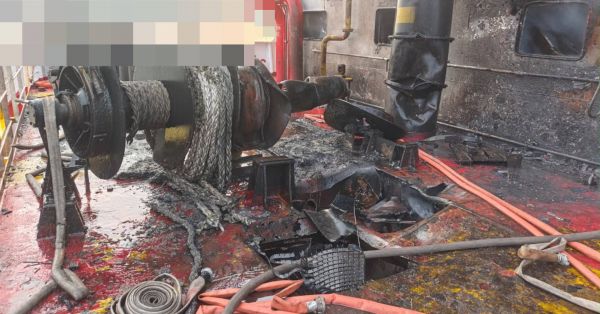
Russia has attacked vessels even in the economic zones of Romania and Bulgaria. The danger to transporting Ukrainian grain has gone beyond our waters — and now the issue is not only how much freight and insurance will cost. How might risks to their own shipping affect our neighbours’ willingness to work with Ukrainian cargo?
Freight broker, shipowner, and founder of Marelis Navigation S.A. Kostiantyn Sobol sees this as Russia’s calculation. We spoke about risks for the Danube, higher insurance costs, and an extra $3–4 per ton of grain.
Latifundist.com: Kostia, after yesterday’s reports of a vessel being targeted in Romania’s economic zone, you suggested Bulgaria might be next. And it happened. How did you know?
Kostiantyn Sobol: It was predictable. Ships sail along this coast. If danger arises on one stretch of the route, there’s no reason to assume the next will automatically be safe. I assumed risks could spread to the Bulgarian section. I just didn’t expect it to happen so quickly.
For the market, the key point is that danger is no longer limited to Ukrainian ports. A shipowner evaluates the entire route: where the vessel will pass, how much it will cost, and what risks he takes on.
Latifundist.com: What happens next?
Sobol: Now vessels will try to sail within the 12‑mile zone to avoid extra insurance costs. If a ship is hit there, it would mean “military killing” on Bulgarian or Romanian territory. Then we’ll have to see how NATO reacts, because that’s already Article 5 (Bulgaria refused to invoke Article 5 after this attack — ed.).
Latifundist.com: You said the war‑risk zone has expanded to the Bosphorus. Do insurance terms differ across parts of the Black Sea? How are insurers reacting to recent attacks?
Sobol: In the past two weeks, the rate rose from 0.1% to 0.5% of the vessel’s value. 0.5% was confirmed as of yesterday. Today we’re still waiting for insurers’ responses. We expect at least 1%, but that’s only a forecast.
There’s still a way to avoid the extra premium — sailing along Romania and Bulgaria within their 12‑mile territorial waters. By my estimate, about 90% of the transit fleet chooses this route. If attacks spread into these waters, insurance terms could change. How much — hard to predict.
Latifundist.com: Can you give a simple example of how this premium affects transport costs?
Sobol: Take a hypothetical 5,000‑tonner worth $1.5 million. At 0.5%, the premium is $7,500. If it carries 5,000 tons of cargo, that’s $1.5 per ton added to freight — for those following club recommendations and paying the premium.
If the rate rises to 1%, the premium is $15,000, or $3 per ton. But that’s a calculation based on a possible increase, not a confirmed expense today.
Latifundist.com: Do you see this mainly as pressure on Ukrainian exports, or also on our neighbours?
Sobol: I think they’re trying to make us as toxic as possible for those organising Ukrainian transit. The signal is roughly: if you carry Ukrainian cargo through your countries, even ships loading in your ports may be at risk.
Earlier I thought they might target ships loaded here, to block the Danube. Now I suspect they could hit a ship with Ukrainian grain loaded in Galați. It sinks, blocks the passage — and that’s it, the route is closed.
This isn’t just about one vessel or cargo. How will others sail? There’s still Bystre, but only “river–sea” class ships work there, and there aren’t many. So you can’t just shift all transport there.
Latifundist.com: What might change in Romania’s and Bulgaria’s positions?
Sobol: Bulgaria, I think, may be cautious not to expose its shipping to extra danger. There isn’t much Ukrainian transit through it, but risks exist.
Romania is less clear. It’s interested in our transit, wants to profit from it. But if its own exports and imports are threatened, I fear they might restrict our passage.
Latifundist.com: You mentioned sea drones. How does this threat affect merchant shipping?
Sobol: Both small and large vessels are vulnerable. But with specific incidents, we must distinguish assumptions from established facts. Not in every case can we immediately say what exactly hit the vessel. For the market, the main point is that such a threat exists and must be factored in.
Latifundist.com: Russian grain exports also depend on the sea. Doesn’t that restrain Russia?
Sobol: They’re developing Ust‑Luga, building terminals there. Many were coal terminals, now they’ll be aimed at grain. But in my view, for Putin, grain and grain trade don’t matter. The priority is minerals, especially oil.
If grain stays inside the country, not a big deal. Instead, he may bet that restricting both their and our exports will push wheat prices up. That’s another tool of pressure on the global community. So I wouldn’t count on Russia’s own grain exporters stopping escalation.
Latifundist.com: And Novorossiysk, what’s happening there now?
Sobol: Occasional actions — whoever gets through, gets through — but the situation is close to ours.
Latifundist.com: I’ve seen claims that the strikes on three Turkish‑owned vessels in recent days weren’t random, but targeted hunting of their fleet. What’s your view?
Sobol: I wouldn’t rush to that conclusion. Take Palmali, whose vessel was hit the day before yesterday. Formally a Turkish company, founded by an Azerbaijani businessman, but historically its business was closely tied to Russia. Their ships carried oil and oil products along the Volga and Don, worked on the Caspian. Those rivers were the basis of their fleet’s work. That’s why I call them “their own.”
Same with Royad Mammadov (the vessel hit off Romania’s coast). It used to work from Rostov, and its last voyage was from our Izmail, on the Danube. I told you: after the Azov Sea was closed, part of the fleet that worked there came to us. This is one such example. And I suppose that, for working with Ukrainian cargo, they may have been sent such a “message,” a demonstrative punishment.