Economy Ministry assesses winter crops: losses may reach 30–40% in one region


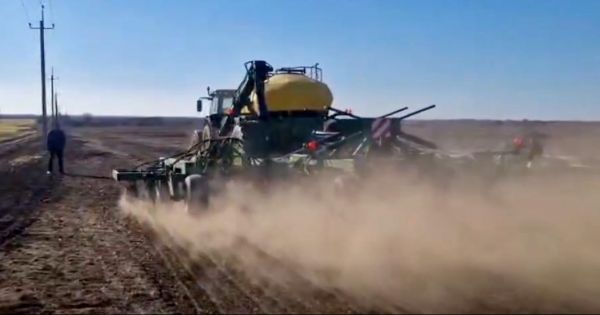
Ukraine is preparing to launch its spring sowing campaign. This year, fieldwork in most regions is expected to start later than usual due to deeper soil freezing and longer-lasting snow cover in some areas, said Taras Vysotskyi, Deputy Minister of Economy, Environment and Agriculture of Ukraine, speaking on the Suspilne TV channel.
“Growers have sufficient stocks of key inputs for the spring sowing campaign for at least several weeks, and often for several months. This is necessary because agricultural production has a long cycle: one harvest per year requires careful preparation well in advance. Fuel for field operations has also been purchased in advance, so no shortages of resources are expected at the start of the sowing campaign,” Vysotskyi said.
According to him, a potential increase in fuel prices currently has no critical impact on production economics. Fuel accounts for about 10–15% of production costs for certain crops, “so even if prices rise, the impact on the final cost of production is estimated at only 1–2%.”
Vysotskyi noted that the sowing campaign traditionally begins in southern regions — Mykolaiv, Odesa and Dnipropetrovsk regions — and gradually moves northward across the country.
According to the Economy Ministry’s estimates, the area sown with spring crops in 2026 will not change significantly and will remain roughly at last year’s level. This also applies to frontline regions, where farmers plan to cultivate all available and safe land.
Most winter crops have successfully come through the winter, Vysotskyi said. In most regions, losses do not exceed 3–5%, and in some areas there are none at all. However, the situation is somewhat more challenging in several regions. In Kirovohrad region, losses may reach 30–40% of winter crops, in Vinnytsia region up to 20–30%, and in Dnipropetrovsk, Poltava and Cherkasy regions up to 10–20%.
“Even in regions with higher losses, this does not pose a threat to farm operations, as winter crops usually account for only 20–30% of the crop structure. In terms of overall production, the losses will be significantly smaller,” Vysotskyi added.