Over 30 million tons of Ukrainian grain will go unexported unless port operations resume, minister says


More than 30 million tons of Ukrainian grain and oilseeds will not reach international markets unless exports through the Black Sea ports resume, Agriculture Minister Taras Vysotskyi told Reuters, warning that alternative routes cannot fully replace maritime shipments.
Russia has intensified missile and drone attacks on foreign-flagged civilian vessels near Odesa's ports, through which the bulk of Ukraine's grain exports normally move.
According to Vysotskyi, roughly half of this year's projected grain and oilseed harvest is now at risk because of the disruption to port operations.
"A significant volume of produce — just over 30 million tons — will not be exported to international markets unless this problem is resolved," he said.
The minister said Ukrainian growers are already feeling the impact of the logistics crisis, with average prices for grain and oilseed crops falling by around 30%.
"The situation is extremely difficult. In some respects, it is even more challenging than in March-April 2022," Vysotskyi said.
He estimated that direct losses to Ukraine's agricultural sector this year could total $1.5 billion to $3 billion, an estimate that has not previously been made public.
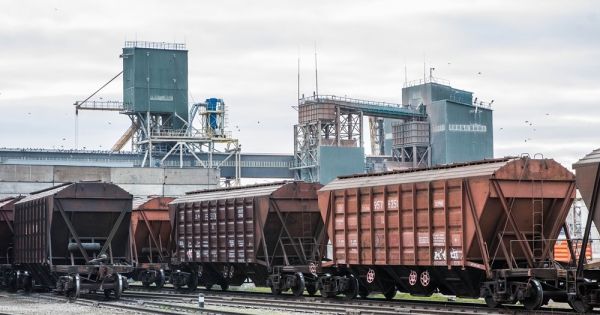
According to Vysotskyi, the main alternatives to Black Sea ports remain the Danube corridor, rail transport and road haulage, with rail expected to play the central role.
However, historically low water levels on the Danube mean the river route will be unable to play a significant role at least until October, he said.
While the necessary procedures have already been launched and exporters can already use alternative routes, these corridors are expected to reach a relatively stable level of operation only by the end of August.
Even then, their combined capacity will amount to only 50-55% of the monthly throughput of the Black Sea ports, which can export about 6 million tons of agricultural products per month. As a result, Vysotskyi said alternative logistics can serve only as a temporary solution rather than a full replacement for maritime exports.
Using alternative routes will also increase producers' logistics costs by an additional $45-50 per ton, he added.
"There is no alternative to Odesa's ports if Ukraine wants to remain a guarantor of global food security," Vysotskyi said.