
Russian Flaxseed Masked as Kazakhstan's: How Russia Bypasses EU Tariffs



Photo by: Latifundist.com
In early August, publications by Yevgeniy Karabanov, Head of the Analytics Committee at the Grain Union of Kazakhstan (GUK), caught our attention. He reported on the success of Kazakh flaxseed exports, particularly toward the EU and China. At the same time, he did not conceal the fact that these record-breaking figures were achieved thanks to importing surplus volumes from Russia.
Where is the flax from Kazakhstan shipped next? Our sources claim that a re-export scheme to European Union countries has been activated: by altering the country of origin, Russians are bypassing EU protective tariffs.
Over almost five years, our editorial team has grown accustomed to the fact that anomalies in the foreign trade of post-Soviet countries are often linked to Russia's attempts to evade Western sanctions. As we dove deeper into flax — a crop non-core for Ukraine — we discovered a classic open secret: people in the oilseed industry know about the Russian flax re-export scheme, but prefer not to talk about it publicly.
An Absolute Record for Kazakh Exporters!
Yevgeniy Karabanov wrote about the export dynamics of flaxseed for the 2025/26 marketing year (September through August), citing the State Revenue Committee of the Republic of Kazakhstan.

Yevgeniy Karabanov
Head of the Analytics Committee at GUK
"In the first 11 months of the 2025/26 MY, Kazakh flaxseed exports hit an absolute record of 1.22 million tons. This is 2.42 times higher than the same period last MY and more than 2.3 times higher than total exports for the entire previous MY! In modern history, Kazakhstan has never exported this much flaxseed."
Belgium (27.9% of total export volume) and China (39.7%) were the two main buyers of Kazakh flax this season. Over the 11 months of the current MY, these two countries accounted for 67.6% of all flaxseed originating from Kazakhstan.
The abnormal growth of Kazakh exports directly impacts EU countries, according to data provided by Yevgeniy Karabanov. Compared to the same period last MY, flax exports to these countries grew significantly:
-
Belgium: 341.2 thousand tons (a 1.9-fold increase)
-
Poland: 106.2 thousand tons (a 3-fold increase)
-
Germany: 14.6 thousand tons (+24%)
-
Czech Republic: 12 thousand tons (a 3.1-fold increase)
-
Lithuania: 10.6 thousand tons (+58%)
-
Netherlands: 6.4 thousand tons (a 6.4-fold increase)
-
Estonia: 42 thousand tons (0 in the previous MY)
-
Italy: 7.6 thousand tons (+58%)
The rise in flaxseed exports from Kazakhstan to the EU is striking, the expert highlights. Karabanov quotes the European Commission’s DG AGRI TAXUD Customs Surveillance System, which shows that EU imports between July 2025 and June 2026 grew by 16.8% compared to the previous period, reaching 686.8 thousand tons.
Yevgeniy Karabanov
Head of the Analytics Committee at GUK
"The share of Kazakh flax in total EU import volume reached 72.5% (497.8 thousand tons) during this period, while the share of Russian flax fell to 12.3% (84.1 thousand tons). Compared to the same period last MY, flax imports from Kazakhstan jumped by 88%, while those from Russia plummeted by 50%."
Are Russia and the Export Anomaly Linked?
Kazakh experts themselves speak openly about the re-export of Russian flax to Europe via Kazakhstan.
The decline in official statistical volumes of direct flaxseed exports from Russia to the EU is a direct result of import duties introduced by the European Union against Russian flax. In 2025, the rate was set at 20%, and starting in 2026, a protective tariff of 50% came into force. On top of that, Russia introduced its own domestic 10% export duty. Consequently, if a Russian farmer wants to export flaxseed to Europe, they face a combined duty of 60% (50% + 10%), making direct trade economically unviable.
Following the sanctions on the aggressor state, the EU has actively substituted Russian product with Canadian supplies. To facilitate this, the EU lifted multi-year tariffs on Canada, while also supplementing Russian volume with imports from Ukraine and... Kazakhstan.
Yevgeniy Karabanov breaks down the economics behind this trade. Russian farmers view flax as an export-oriented, high-margin crop that remained unregulated by export duties until 2026.
Yevgeniy Karabanov
Head of the Analytics Committee at GUK
"Flaxseed processing volumes in both Russia and Kazakhstan are negligible. Neither Russian nor Kazakh linseed oil is in high demand. Domestic market consumption is minuscule, while China has expanded its own processing facilities and only seeks raw seeds. The EU has sufficient domestic processing capacity and likewise purchases raw materials."
According to his data, driven by EU market news, Kazakhstan increased its flax planted area by 55% in 2025 to 1.35 million hectares, yielding roughly 1 million tons of crop. Thus, Kazakh farmers are capitalising on a lucrative opportunity to export their own produce to the EU and China while favourable sanction regimes last.
In March 2026, the analyst posted on his Telegram channel: "Due to increased flax imports into Kazakhstan from Russia, we are raising our previous forecast for Kazakh flaxseed exports this MY by 30 thousand tons — to 820 thousand tons."
Owing to Russian imports, the Grain Union of Kazakhstan repeatedly raised its flax export forecast throughout 2026: to 910 thousand tons and 1.05 million tons in April, 1.15 million tons in June, and 1.25 million tons in July. In August, the forecast was bumped by another 30 thousand tons: expecting 1.28 million tons of combined Kazakh and Russian flax exports by September.
Do Flax Exports Disconnect from Carryover Stocks?
When the Latifundist.com editorial team looked into the abnormal growth of Russian flaxseed exports to Kazakhstan, industry experts had already been investigating the anomaly. Oleg Ilyin, Managing Partner at international consulting firm ASER, points out: as of July 1, 2026, official oilseed flax stocks in Kazakhstan stood at 484 thousand tons, while total reported imports from all countries amounted to 33 thousand tons.
At the same time, the gross flaxseed harvest in 2025 totalled 1.351 million tons, which reduces to 1.08–1.22 million tons after accounting for drying and cleaning losses. Subtracting the officially reported exports of 1.081 million tons and 100 thousand tons of domestic consumption, carryover stocks should have been between 118 thousand and 254 thousand tons.
According to his calculations, the discrepancy with the 484 thousand tons of carryover stocks reported by the Bureau of National Statistics of Kazakhstan ranges between 230 thousand and 366 thousand tons. A verification of crop balance sheets shows that under these initial parameters, such excess flax volume could not have originated solely from local harvests and officially logged imports. Consequently, there are only two explanations for a discrepancy of several hundred thousand tons: either actual domestic yield was significantly higher, or the import flow was far larger than officially reported.
"Given the geography, trade structure, and cross-border market activity, the most likely source of this 'additional' supply is Russian flax. In this scenario, we may be looking at shipments that are either omitted from official statistics or reported with distorted numbers," suggests Oleg Ilyin.
While stopping short of directly accusing Kazakhstan of illegally importing Russian flaxseed, he concludes that official figures for production, import, export, and carryover stocks simply do not add up. Without these supplementary volumes, Kazakhstan would have run out of raw material for export by late May, yet physical shipments continue uninterrupted.
Oleg Ilyin also raises an infrastructure query: in which storage facilities were the reported 484 thousand tons of flaxseed — over a third of the entire 2025 harvest — physically kept? If actual carryover stocks are truly that massive, the Kazakh market should have experienced severe pressure on elevator capacity and logistics right before the new harvest. This is particularly crucial because flax is harvested between late August and late September — a timeframe when storage space is already occupied by early grains, and farmers are meticulously budgeting remaining capacity for incoming corn and sunflower seeds.
Anomalies Observed on the European Route As Well
Sources in the oilseed sector confirmed to us off the record: the re-export of Russian flax to the EU via Kazakhstan is taking place. According to their insights, Kazakh flax reaches Europe through four main channels:
- By rail through Russia to Estonian and Latvian ports, continuing by sea to Belgium (primarily the Port of Ghent). Industry representatives consider this route "white" — goods originating from Kazakhstan with verifiable documentation pass through here. Final customs clearance occurs directly in the transit nations of Latvia and Estonia, after which the cargo moves to Ghent fully cleared.
- By rail through Belarus to land customs crossings with Poland. This is also considered a "white" channel because customs clearance takes place in Poland, where European authorities can request origin and transit documentation from shippers at various stages. Additionally, cargo travels in sealed railcars and undergoes modal shifts.
- By rail through Russia to Leningrad Oblast ports (Vysotsk and Avtovo), followed by sea transport to Belgium. This route is considered questionable: flaxseed is transferred from railcars to vessels in Baltic ports, while customs clearance occurs only upon arrival in European ports. Fraudulent documentation risks are high at this stage.
- The Trans-Caspian Route (a potential logistical alternative). Transported by ferry across the Caspian Sea, Kazakh flax could transit Azerbaijan, Georgia (optionally Turkey), and reach Europe via the Black Sea. This route is virtually unused due to limited capacity at Georgian ports, while the ongoing blockade of Ukrainian and Russian ports renders it impractical.
Notably, in 2024, Russia restricted Kazakh exporters from transiting flax through its territory, funneling them into a single route via the Port of Vysotsk. The official reason cited for limiting the transit of Kazakh soft commodities was instances of "fraudulent imports" into Russia.
"In regions bordering Russia, fraudulent wheat imports continue to be reported. Because Russia maintains substantial domestic production and all Russian port facilities are at capacity, the Russian government imposed a de facto ban on Kazakh exporters using Russian infrastructure to access the global market. For flaxseed shipments to Belgium, Kazakh exporters are restricted solely to the Baltic port of Vysotsk," stated a USDA report published in 2024.
The modal shift in Russian ports creates an environment where Russian officials have the technical capacity to "turn a blind eye" to goods of suspicious origin or falsified paperwork. Port authorities or customs officials need not forge documents themselves — failing to scrutinise paperwork provided by carriers is often enough.
Rough estimates from industry sources indicate that at least 70,000–100,000 tons of Russian flax passed through Leningrad Oblast ports this season. These "additional" volumes enabling the "Kazakh anomaly" are grown in Russian regions bordering Kazakhstan. In 2025, six Russian regions along the 4,000-km shared border harvested roughly 1 million tons of oilseed flax — accounting for 48% of Russia's total harvest.
Geographically, the closest Russian flax-producing regions lie just 100–500 km from the border city of Petropavlovsk in Kazakhstan. Such a high concentration of yield near an open steppe border creates a natural logistical channel for supplying the "surplus" 230,000–365,000 tons identified by expert Oleg Ilyin in Kazakhstan's balance sheet.
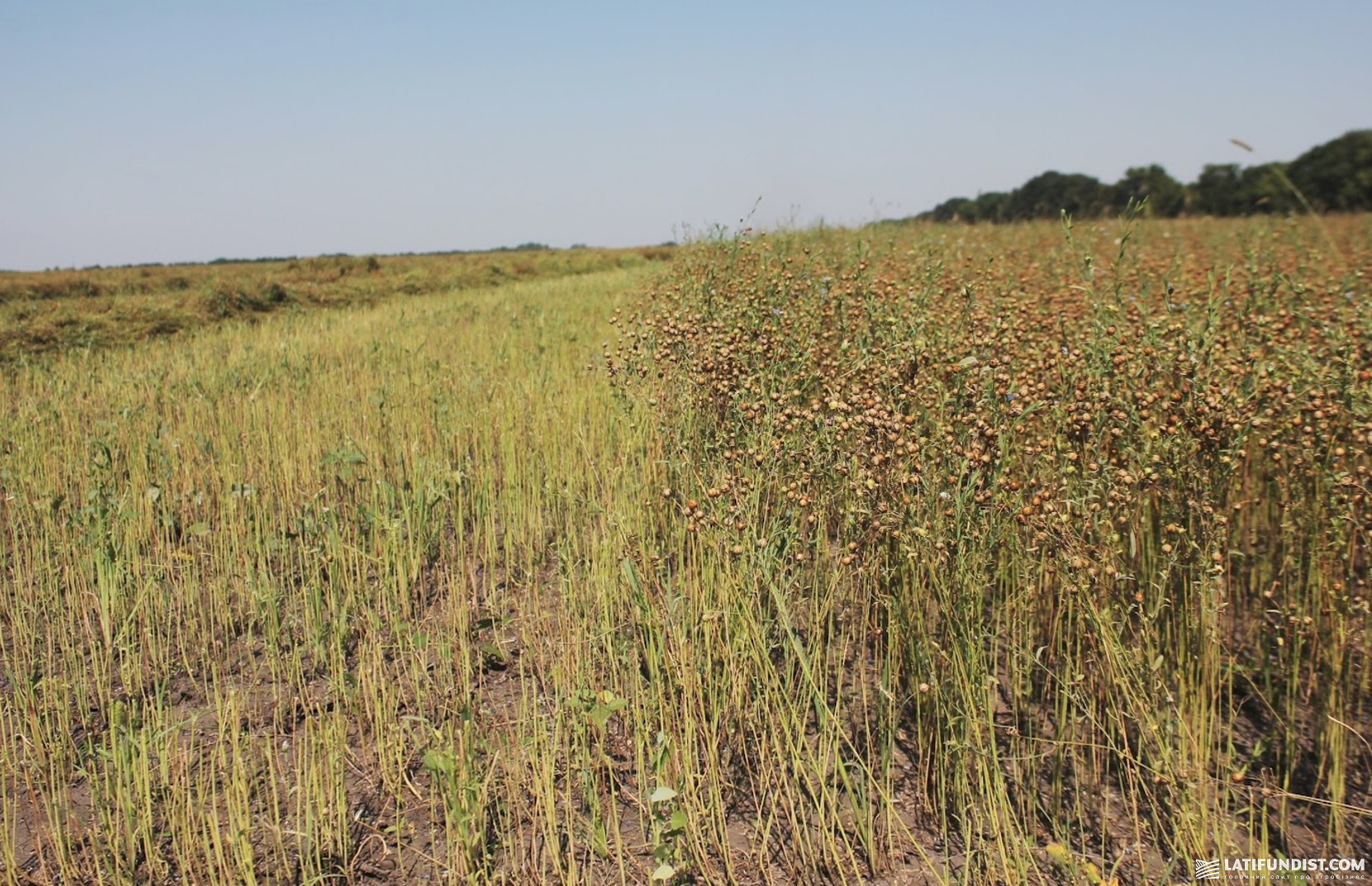
Market experts emphasise that Russians have strong incentives to seek re-export channels through CIS countries. Russian regions adjacent to Kazakhstan are well-suited for flax, and in favourable seasons, cultivation profitability can top 100%. At current Kazakh export prices around $450–$455/ton FCA, suppliers masking Russian flax as Kazakh earn up to $150 per ton, according to our sources. This margin justifies scheme manoeuvres aimed at circumventing the 60% combined duty (50% + 10%) imposed on direct EU shipments.
History Repeating Itself
In recent years, multiple cases involving the transit of Russian-origin goods through Kazakhstan have surfaced. While no formal proceedings have yet been opened specifically regarding flaxseed, convictions have been handed down for other commodity groups. The most common schemes include:
- Fraudulent Country of Origin: In 2023–2024, the European Commission conducted an official investigation into birch plywood. Following a ban on direct imports from Russia, shipments were redirected through Kazakhstan and Turkey accompanied by fraudulent origin documentation. Consequently, the EU confirmed the relabeling of Russian products and applied anti-dumping duties to all birch plywood imported from both countries.
- Under-reporting Quantities: Russian grain is trucked into Kazakhstan while under-declaring cargo volumes. Russian raw materials entering through Kazakhstan's border region of Pavlodar receive fraudulent Kazakh documentation, allowing perpetrators to profit from selling into premium markets. This scheme is also utilised to evade VAT.
- Origin Swapping to Exploit Railway Tariffs: Cheap Russian agricultural goods are re-exported to third countries (Uzbekistan, Azerbaijan, Afghanistan, Iran, China) disguised as Kazakh products to access lower international rail tariffs on Kazakhstan’s railway network.
The most recent example of such fraud was an investigative report published by Orda.kz regarding imports of Russian sunflower oil in May 2026. Russian oil was declared at Kazakh customs at prices seven times lower than market value before being re-routed to Uzbekistan and Afghanistan. Remarkably, in several instances, the oil was shipped still bearing Russian commercial trademarks.
Investigative journalists cited a local association of oilseed processors, which has been tracking fraudulent Russian oil imports for several years. As early as 2023, association specialists discovered oil imported from Russia on market shelves and in small retail shops across Taraz and Shymkent.
"The association highlights export routes as a distinct area of concern. According to their spokesperson, Russian sunflower oil is brought into Kazakhstan and subsequently sold to Central Asian countries disguised as a Kazakh product," reports Orda.kz.
Discussions around fake local manufacturing and fraudulent product origins are prominent in Kazakh society. Local politicians do not keep secret that products labelled "Made in Kazakhstan" frequently originate in Russia or China.
Taken together, these cases paint Kazakhstan as a jurisdiction vulnerable to the origin-laundering of Russian commodities — a vulnerability corroborated by criminal cases both inside and outside the country.
Why We Are Writing About Flaxseed Imports to the EU
What varies most among our sources is their assessment of the impact of flaxseed re-exported from Russia via Kazakhstan. According to a conservative estimate from one source, the practice of "relabeling" flaxseed shipments did indeed take place. Consequently, EU law enforcement authorities responded swiftly and have already opened two legal proceedings against importers, with one vessel carrying the cargo seized in the Belgian Port of Ghent.
According to this source, Kazakh authorities are not interested in damaging their international trade reputation and have no intention of undermining relations with Europe. Therefore, the country will take the necessary precautionary steps to ensure that the re-export of Russian commodities does not become a widespread practice.
Another oilseed sector representative holds a different view: the current high profit margins on flaxseed will only incentivise Russians to enter the premium EU market through neighbouring jurisdictions. This season, imports of Kazakh (including Russian) flaxseed delivered a heavy blow to the European supply balance, triggering localised panic.
"The European flaxseed market is a community with long-established rules; some processors have been working with this crop for over a century. Farmers and processors used to agree on cultivation volumes in advance, determining who would sell where. This season, an influx of excess imports from Kazakhstan arrived in Europe, disrupting the market balance. Even now, processors remain fully booked with imported raw materials through the end of the year," explains the anonymous source.
Given that flax acreage in Russia continues to expand, market imbalances in the EU caused by imported volumes could further intensify next season, the source adds.
Why This Issue Matters to Ukraine
Russian flaxseed reaching the EU is yet another link in the chain of sanctions evasion by the aggressor state through neighbouring countries. Despite the ongoing war, the issue of Russian product re-exports via CIS countries is also widely discussed in Ukraine.
For instance, Ukrainian buckwheat producers have pointed out for several years that buckwheat imported from Kazakhstan actually originates from Russia's Altai region. However, a comprehensive investigation into the origin of imported buckwheat has yet to be conducted. The reason lies in economic viability: buckwheat remains a niche crop in Ukraine. It is cultivated by a small number of farmers who simply lack the financial resources and operational capacity to prove the Russian origin of these imports and restrict them under World Trade Organisation rules.
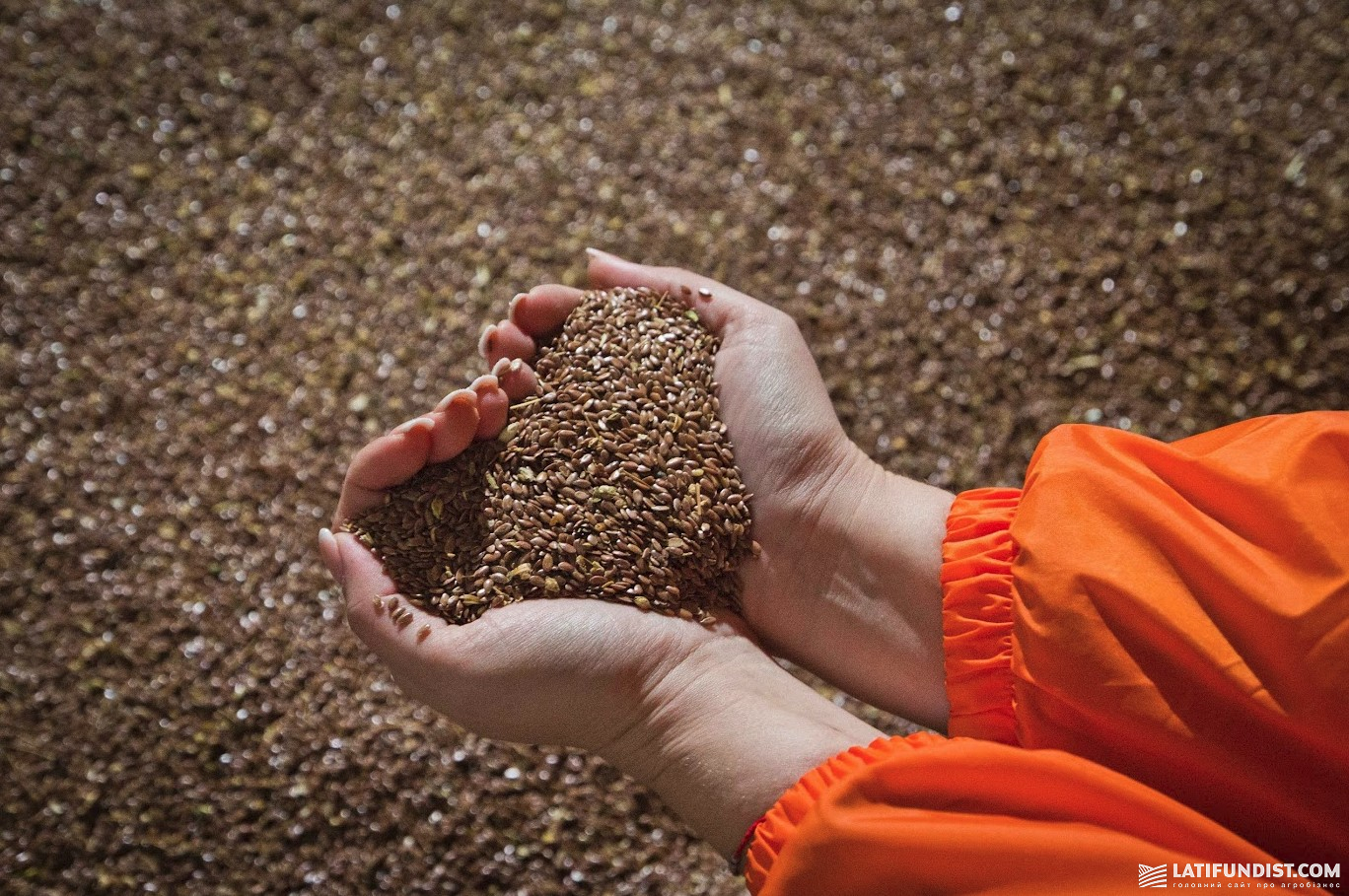
The flaxseed saga is simply another episode in a series of schemes utilised by Russia to bypass sanction pressures through adjacent jurisdictions. While the commodities shift — birch plywood, sunflower oil, grain, flaxseed, or fertilisers — the core tactic remains unchanged: the aggressor nation identifies a loophole in origin tracking and monetises it until buyers spot the substitution.
While the EU learns to detect origin fraud after the fact, sanctioned commodities clear customs and revenues settle in the pockets of sanctioned owners. Meanwhile, Russia continues expanding its flax planted area, likely preparing to repeat the scheme in the coming season.
Oleksiy Kozachenko, Latifundist.com