
How 30-Year-Old Mykhailo Voronych Built a Grain Trader That Outpaced Part of ABCD — And Yes, We Asked About Iran, Odesa Portside Plant, and Mindich

Photo by: Latifundist.com
Before the full-scale war, few people had heard of Arista Trade. Yet within a short period, the company broke into the ranks of the leading grain traders. In 2024, it exported 3.6 million tons of grain, entering the top-5 Ukrainian agricultural exporters — ahead of some multinational companies. And it did so without owning elevators, terminals, or railcars.
As volumes grew, so did questions. Recently, media reports claimed that the company had allegedly supplied corn to Iran, imported urea from there, and that it is backed by Timur Mindich.
In an interview with Arista Trading co-owner and CEO Mykhailo Voronych, we discuss Iran, Mindich, the Odesa Portside Plant (OPP), trading margins, and the future of new grain traders.
Latifundist.com: For the past few years, people on the market have kept telling me to interview you. The main message is: you appeared almost out of nowhere, export millions of tons, and everything revolves around Voronych. I saw statistics for calendar year 2024 — you were among the top five exporters, ahead of part of the ABCD traders. How much did you export then and in 2025?
Mykhailo Voronych: If we take the calendar year, in 2024, we exported 3.6 million tons. Last year — 2.8 million.
Latifundist.com: Why did volumes decrease?
Mykhailo Voronych: Three factors: more complicated logistics, a generally smaller harvest, and export duties that reduced rapeseed and soybean exports.
As for this year, we will see how the situation develops. On the one hand, logistics may reduce volumes. On the other hand, a larger corn harvest could increase exports.
Last year, there was a pause in corn exports during the summer. I think this year corn shipments will continue until August–September, possibly even into September.
Latifundist.com: You made your mark at the beginning of the invasion. Back then, many traders appeared on the market, including non-core players. Risks were high, but margins covered everything. Now margins are minimal, and it is easy to slip into losses. Has the market consolidation people talk about already happened?
Mykhailo Voronych: It already has. Look at how many visible Ukrainian traders are left on the market. Not many.
There’s us, Menora, Granova — and that’s basically it. I’m not counting players like Kernel or Nibulon.
But in 2022, everyone and their dog suddenly became a trader.
Latifundist.com: How did you manage to stay afloat?
Mykhailo Voronych: In 2022–2023, we understood several things that many underestimated, and thanks to them, we grew stronger.
We didn’t focus on shipping everything — wheat, corn, “everything.” Instead, we concentrated on one or two commodities.
First sunflower, then soybeans and rapeseed.
The real breakthrough came when the grain corridor opened and then closed again in 2023. That was when panic was at its peak. Farmers were ready to sell — prices were more acceptable, and they needed cash.
Then the corridor closed right when the rapeseed harvest began. Before the war, rapeseed exports were largely handled by ADM and Cargill, and they couldn’t quickly shift logistics to the Danube after the corridor closure.

Farmers were ready to sell — and the rapeseed had to go somewhere. In the 2023 season, we became the No.1 rapeseed exporter, surpassing ADM and Cargill.
Latifundist.com: How did you set up the logistics?
Mykhailo Voronych: At the time, we were practically the only ones who built a scheme where 4–5 barges stood simultaneously on the Danube, operating directly — without storage or accumulation — sailing to Constanța.
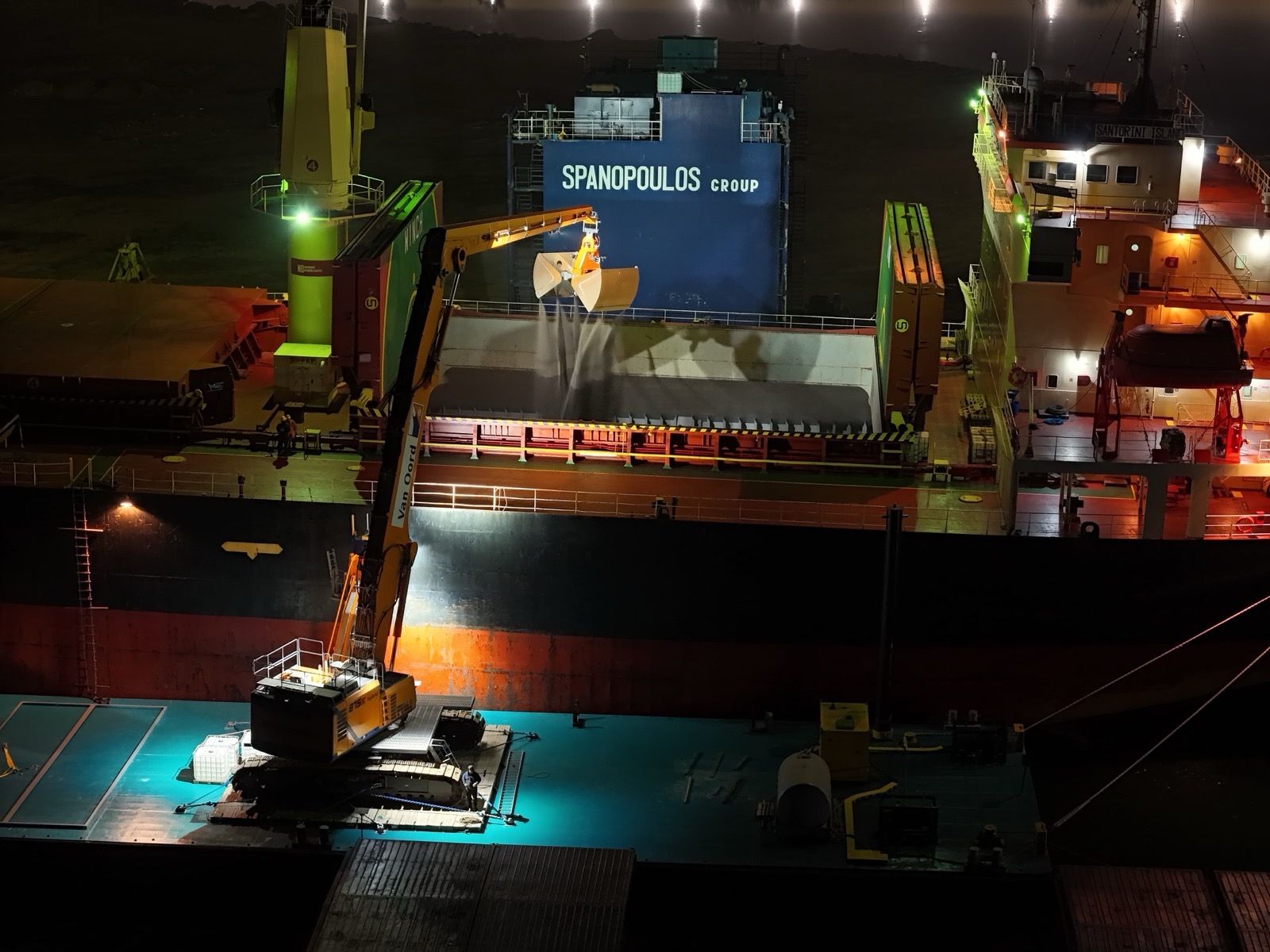
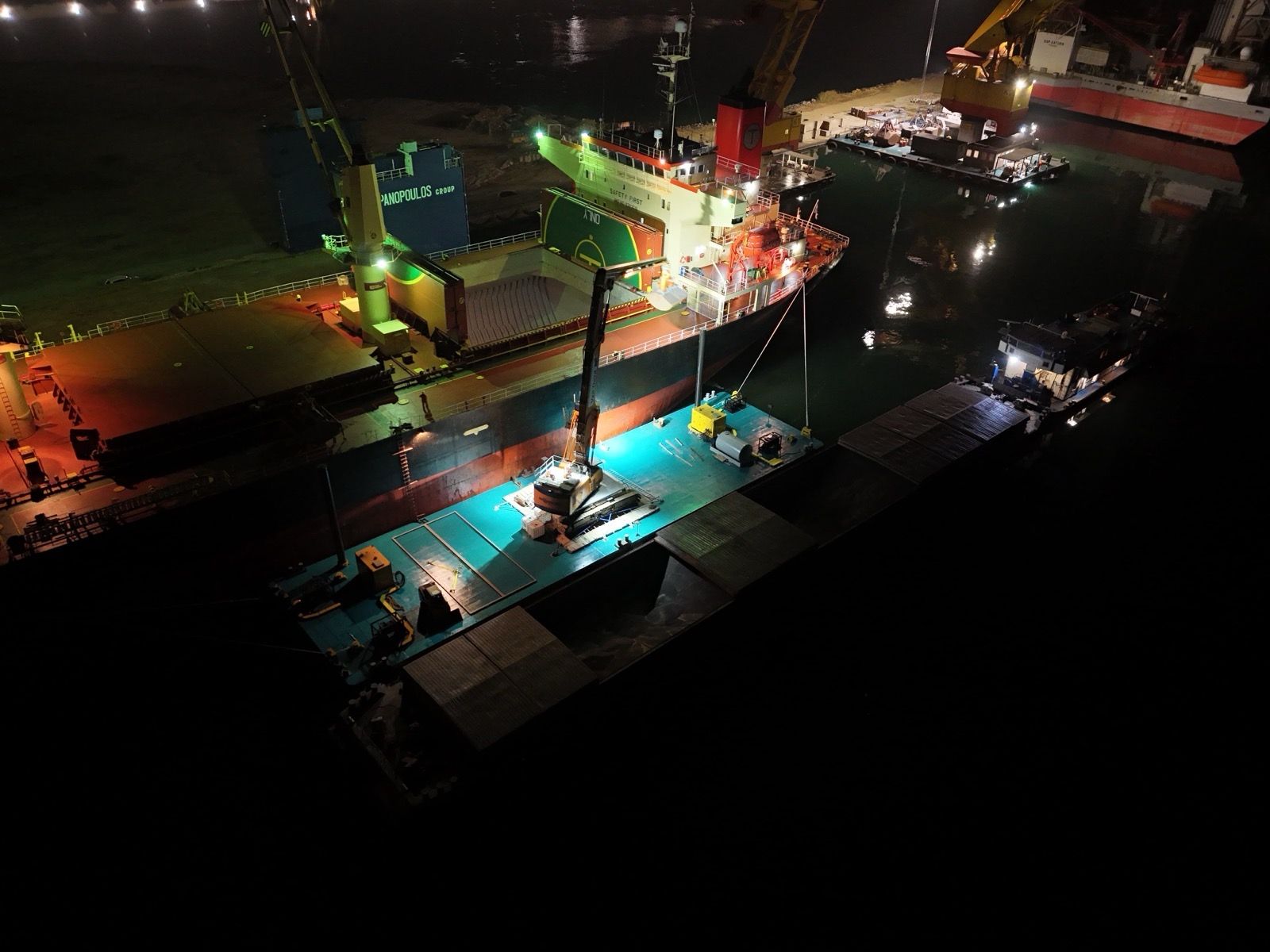
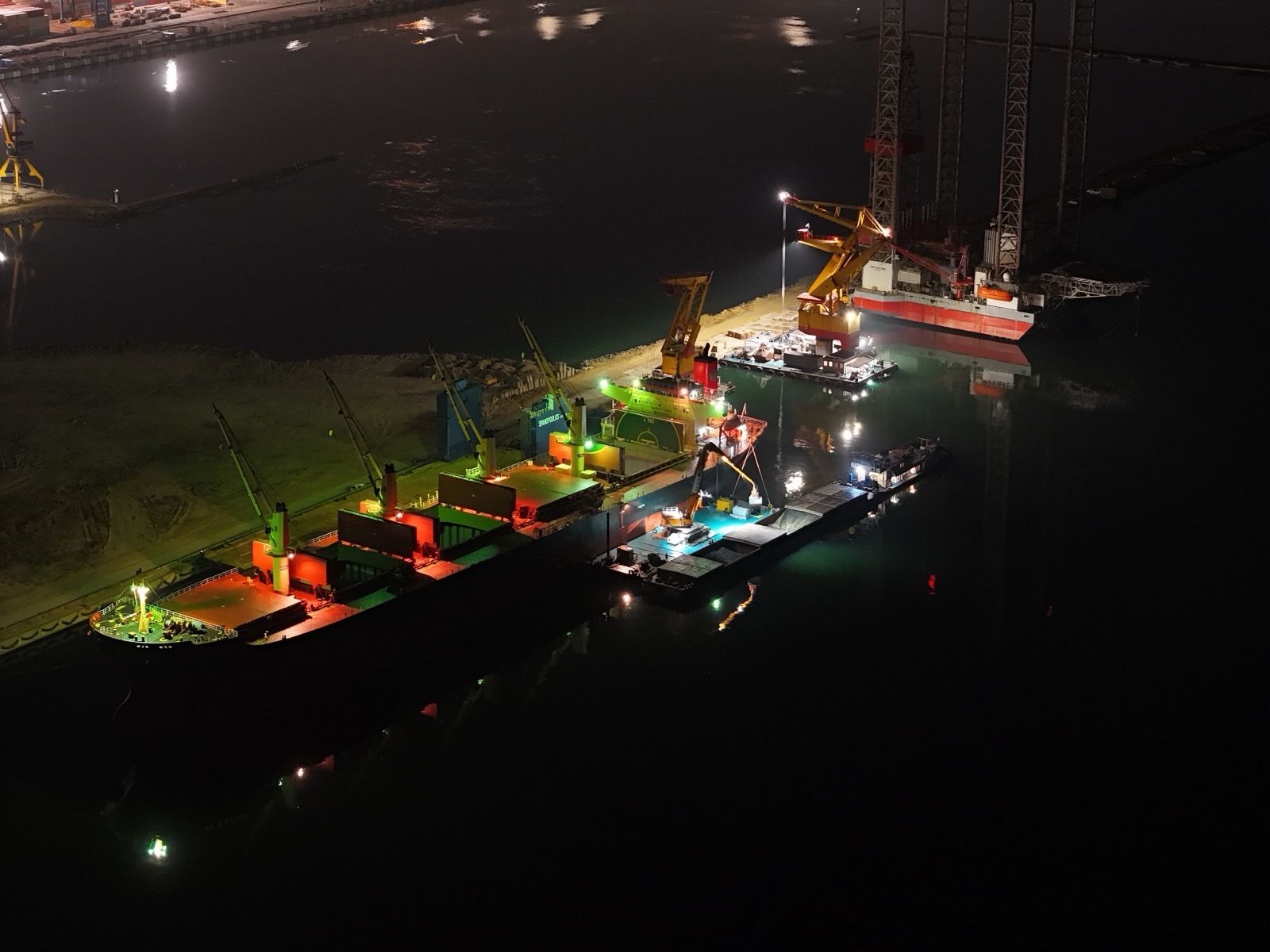
In Constanța, we had a floating crane that transferred the cargo directly from barges to large vessels of 40–50 thousand tons.
We also used this model in Odesa at Novotech Terminal. Essentially, we still operate this way on many commodities: minimum storage, maximum direct transshipment.
Because of this, we saved on handling costs. In 2022–2023, the savings reached up to $8 per ton, simply because we avoided warehouse handling.
Meanwhile, competitors often sold through terminals with a $40–50 discount compared with our pricing.
Latifundist.com: But operators like Teus also work with direct transshipment.
Mykhailo Voronych: They started doing that later. And I’m specifically talking about rapeseed — only we worked with it this systematically.
Latifundist.com: Is it really important whether it’s rapeseed or corn?
Mykhailo Voronych: Absolutely. The choice of commodity significantly improved our reputation and communication with farmers.
Rapeseed is usually grown by more efficient farms — large agricultural holdings and mid-sized producers. You don’t need to persuade them; they were looking for us themselves. At that moment, almost no one was buying rapeseed the way we did.
This choice allowed us to expand cooperation with large agricultural holdings later.
That summer, once the corridor closed, we dropped all commodities except rapeseed, and later added soybeans.
During that period, I didn’t touch wheat, corn, or barley at all.
Logistics bottlenecks
Latifundist.com: What hurts the most in operations today?
Mykhailo Voronych: Logistics — but not ports, railways. Something that used to arrive in 3–4 days now takes 13–15. Problems start from loading all the way to port discharge.
Loading slows due to frost, power outages, shelling, and curfews. Wagons move slower due to attacks, electricity shortages, and traction problems.
At the port, it’s similar: weather, freezing, hatch heating, sampling, electricity outages, broken generators.
Everything stretches out: what used to take 3 days now takes two weeks.
Latifundist.com: What about vessel loading rates?
Mykhailo Voronych: They slowed 1.5–2 times, I would say. It depends on the shelling in Odesa region and the weather.
This winter has been the hardest since 2011–2012, and it coincided with war and attacks. That creates difficulties for everyone — farmers, traders, logistics providers.
Latifundist.com: What commodities are you trading now?
Mykhailo Voronych: I completely abandoned wheat for now — there’s no margin.
My core commodities have always been rapeseed and soybeans. Now their volumes are lower because of export duties, so corn remains the main one.
Our current set is corn, rapeseed, and soybeans.
In 2025, we shipped 400,000 tons of wheat, but we barely made anything on it. The segment is extremely competitive. Some players pay very high prices — for example, Louis Dreyfus — and I don’t fully understand their motivation.
Maybe they want to capture market share and then leverage it later. But from my perspective, it didn't look like a profitable trade.
Speed is the secret
Latifundist.com: What other advantages do you have compared to other players?
Mykhailo Voronych: Speed of decision-making.
We don’t have long approval chains. If I see a direction isn’t working, I stop it. If I see an opportunity, I enter quickly.
A decision like dropping several commodities would take weeks of approvals in many companies. For us, it’s immediate.
Latifundist.com: Was there a moment when a quick decision literally saved a deal?
Mykhailo Voronych: In 2024, a missile directly hit a vessel carrying wheat to Egypt — the bulker AYA. Near Sulina, a rocket blew off the hatch cover of the third hold.
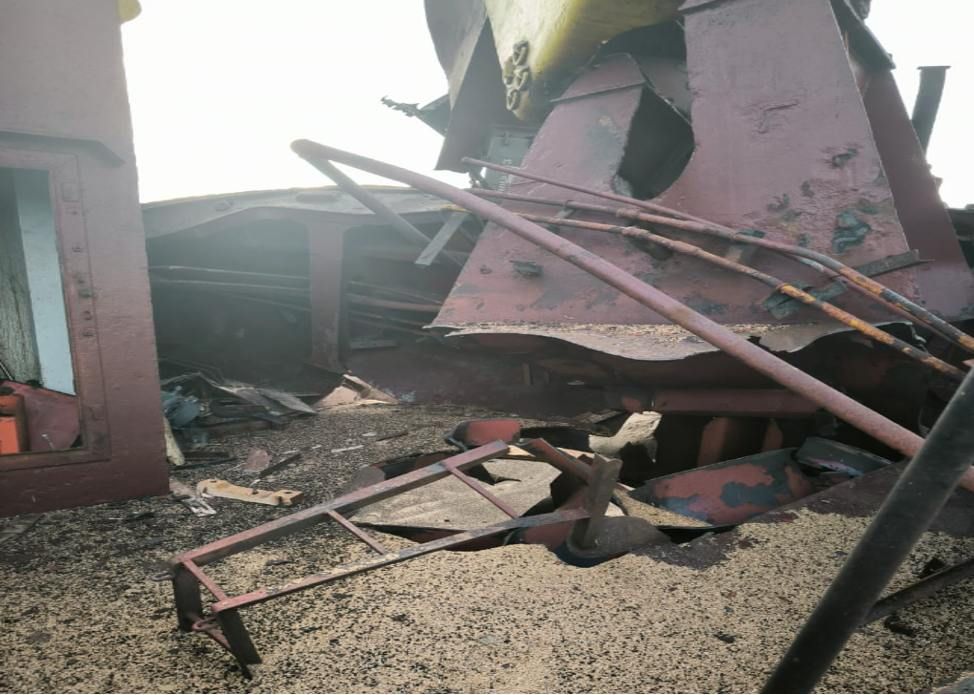
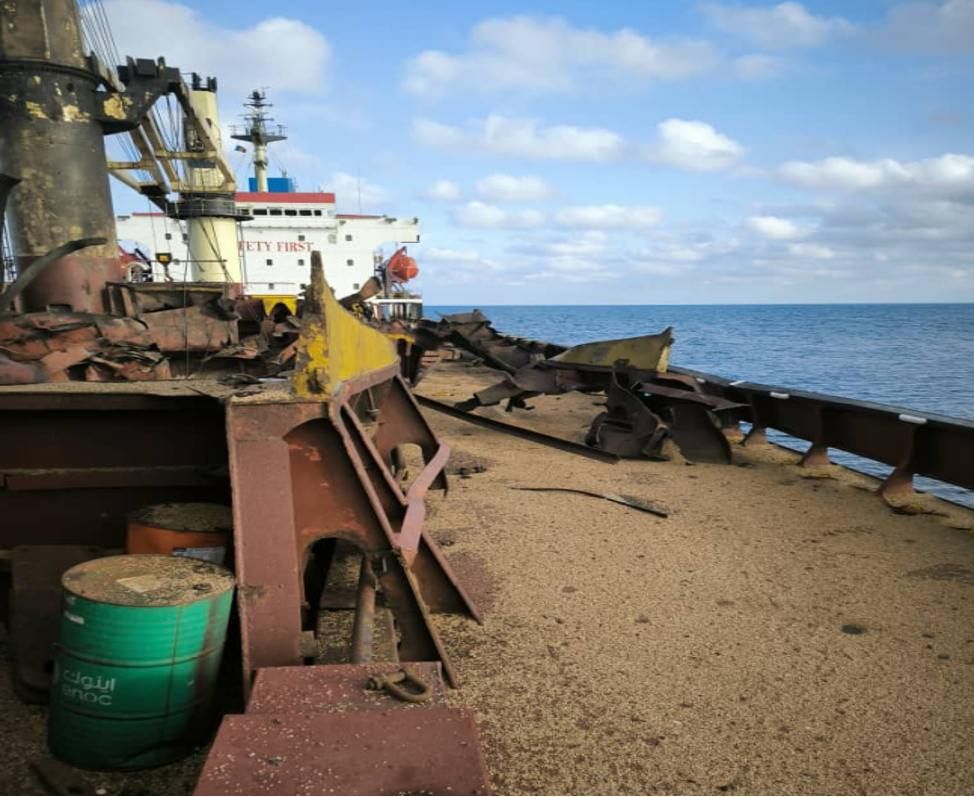
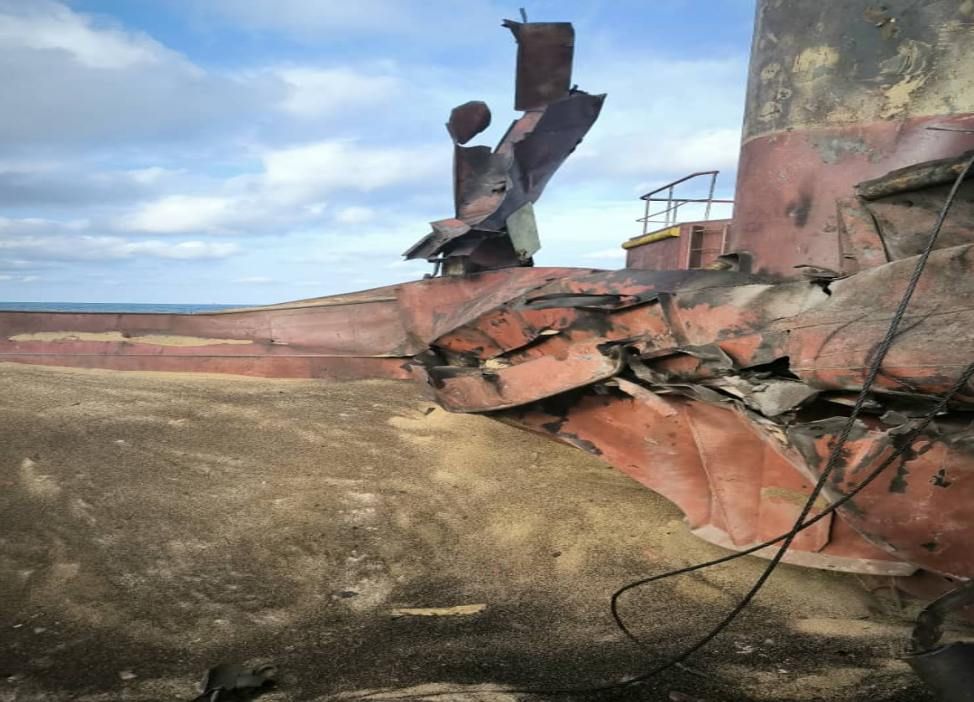
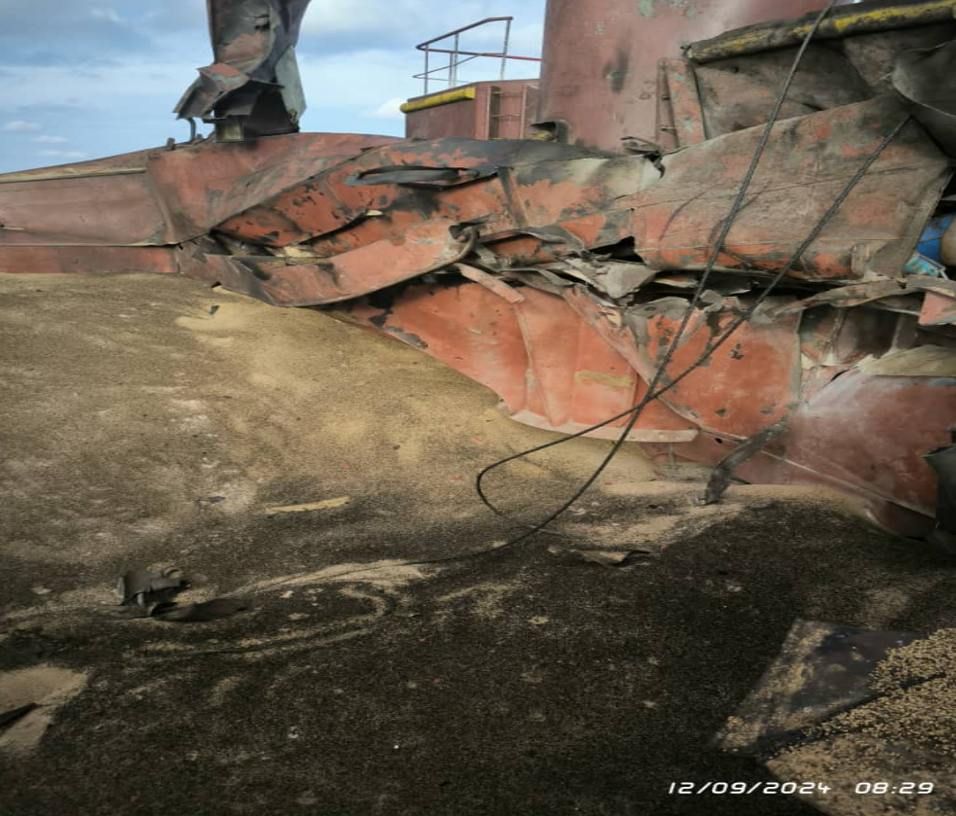
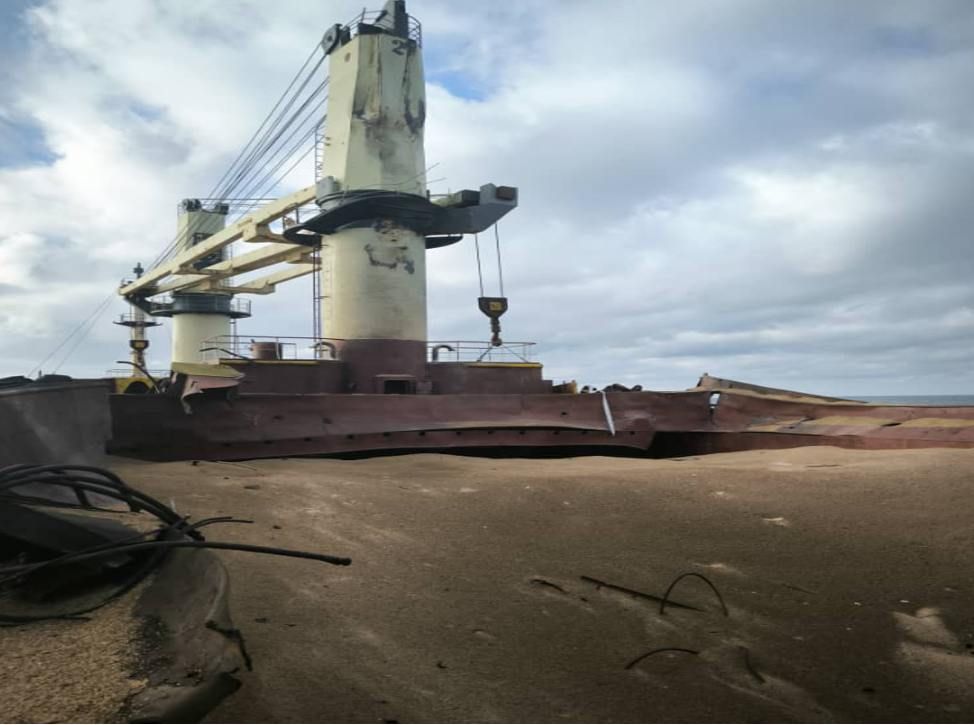
What would half of the companies do? Half the companies would call lawyers and launch multi-year legal battles.
We immediately found a vessel unloading in Constanța, towed the damaged ship there, installed a crane, transferred the cargo, and changed the charter from Odesa–Egypt to Odesa–Constanța.
The shipowner fixed his losses, we fixed ours.
We lost about $600,000, but within a day, the issue was closed, and the Egyptian buyer received the cargo on time, without years of litigation.
And again, it's about the same points: speed of decision-making, absence of lengthy approvals, reputation, and being ready to pick up the phone even at night. This is what enabled us to grow to a certain size as a trader.
Latifundist.com: On the market, people joke that “Misha never sleeps”, meaning Arista is almost a one-man show.
Mykhailo Voronych: Not exactly. We have a strong team, especially in execution and accounting.
But yes, I’m involved in everything: from choosing vessels and loading plans to exports, customs, procurement, and key clients.
I personally charter all vessels, and sales are entirely my responsibility.
When you feel the entire commercial process yourself, you trade better — you see inefficiencies and opportunities others miss.
Latifundist.com: Doesn’t that create a bottleneck effect, when everything depends on one person?
Mykhailo Voronych: No. Our commercial decisions are indeed concentrated in the hands of one person — what to buy, where to sell, what freight to book. But if I stop doing it for a while, we will simply stop trading. The business won’t collapse and we won’t lose money, but the trading activity will pause.
Latifundist.com: When margins returned to pre-war levels and in some cases even turned negative, wasn’t there a temptation to simply put trading on hold?
Mykhailo Voronych: We haven’t had a single loss-making month throughout the entire time we’ve been operating. Yes, margins are shrinking. But you constantly look for opportunities where you can still make money.
We have 36 people in the company. I can redirect the team to another line of business, I can optimize operations. We don’t have a creditor and we don’t have a credit line that must be “spun” at any cost. If I see that something is inefficient and could lead to losses, I simply stop it.
And when margins reappear, you can always come back. You offer a slightly better price, better logistics, better service, pick up the phone — and the commodity starts flowing to you again. The only question is what kind of reputation you leave behind when you put the business on pause.
Latifundist.com: Speaking of creditors. Everyone gives you credit as a trader. But I’ve heard more than once that in a low-margin market, no matter how talented you are, you won’t last long without financial leverage. That’s why different names of “Odesa-based patrons” are often mentioned around your company.
Mykhailo Voronych: Yes, I’m aware — though every time it’s new names. First it was Alperin, now it’s Mindich. I think people tend to overestimate the importance of this business. On a global scale, it’s actually very small and not that interesting.
People build billion-dollar companies at the age of 30. Yet here some think it’s difficult to build a grain trading company in Ukraine. The grain trading business has existed for 200 years. If you do four or five basic things right, you will be more efficient, you will make money, and over time, those funds accumulate as working capital.
Latifundist.com: There are also rumours on the market that you have a “green corridor” — that phytosanitary checks, customs procedures and everything else move faster for you than for others.
Mykhailo Voronych: That’s probably the funniest thing people could come up with. But yes, I’ve heard that too. For context: a year ago, the Bureau of Economic Security froze all of our cargo on vessels belonging to two of our companies. They carried out inspections, found nothing, and lifted the arrests. But the vessels had been standing idle.
We have no fewer problems, stoppages, and delays than anyone else — and often even more. The difference is that we react quickly. If a problem arises, we resolve it the same day. We don’t wait a week while the vessel racks up demurrage.
As for phytosanitary inspections, today there is no such thing as “you pay, and you pass.” You submit the documents, go through the procedure, and receive the certificate.
This isn’t some government contract with huge margins where it would make sense to push your own people through. Grain trading today is a difficult, low-margin business. And if someone thinks that certain players have special advantages here — feel free to enter the market and try it. The reality is that no one does. Because there’s not much to fight for.
Latifundist.com: If you search the court registry, do you appear there often?
Mykhailo Voronych: You’ll probably find 700–800 cases. But there are duplicates — the same cases can have many hearings. We take farmers to court when they fail to return prepayments. Right now, we have two or three such cases: we provided an advance payment, the goods were not delivered, and we are recovering the money through the court. As for others suing us, that doesn’t happen.
Iran and Mindich
Latifundist.com: The current hot topic is Iran. MP Volodymyr Ariev recently claimed that Arista is “protected” by Timur Mindich and supplied corn to Iran while importing urea from there. Did you export grain to Iran?
Mykhailo Voronych: My only question to Ariev is simple: if you investigate someone, you should at least ask them for comment.
So, my question to Ariev is: why did no one try to contact me and get my comments? I would have given very clear answers to all questions.
Now facts. We sell corn FOB to Turkey. Turkish traders can resell it anywhere they want — we cannot prohibit that.
Turkey is a global trading hub. Much of the sunflower oil shipped from Ukraine to Mersin is later reloaded and sold to Syria, Iran, or Iraq. They resell in trucks and tankers.
The same happens with corn, wheat, and flour — they are redistributed across Africa and other regions.
I know Turkish businessmen who bought Ukrainian wheat, processed it together with Russian wheat into flour, and sold it even to Venezuela. In other words, they are so global that you cannot control who sells what and where.
Latifundist.com: Ariev said he had tracked the movement of the vessels and that they were allegedly sailing directly to Iran.
Mykhailo Voronych: First of all, he also claims that these vessels bring fertilizers here. That’s not true. As far as I know, none of these vessels has delivered any fertilizers here. Secondly, the vessels stop in Turkey and then continue on. On MarineTraffic, it shows “cargo discharge and loading procedures.” But what they are physically doing there — well, okay, we could go and check, but who would actually let us in there?
Latifundist.com: Speaking of fertilizers. You are best known as an exporter. Did you import fertilisers after all?
Mykhailo Voronych: We did. Our group has a company, Agrovera. We imported one vessel of fertilizers from SOCAR — about 5,000 tons.
We gave it a try, experimented, brought in 5,000 tons, and sold it.
This is Azerbaijani fertiliser, loaded either in bulk from Poti or from Turkey — the port of Trabzon — in big bags. We took it from the port in big bags.
Latifundist.com: Apparently, they're talking about something else. At the end of last year, there were rumours on the market that a batch of Omani fertilisers had been delivered to Ukraine, which were actually produced in countries subject to sanctions.
Mykhailo Voronych: That was a different story. We resold a batch that had already arrived in Ukraine and been cleared through customs.

People we know imported it and asked us to help sell it through our distribution channels. We have a sales channel: agricultural companies call and ask if we have fertilisers.
We checked the documents — they confirmed Omani origin. We purchased some for our Agrovera and sold them to farmers. The farmers asked about their origin, and I replied, ‘Omani.’
Latifundist.com: I can't help but ask — do you know Mindich?
Mykhailo Voronych: Of course not. I think he didn’t even know about us until media stories appeared.
Someone likely pushed Ariev to look into us — probably competitors. They say: “The beneficiary is only 30 years old — he can’t be exporting these volumes without a ‘patron’.”
Latifundist.com: And what about the documents he referred to?
Mykhailo Voronych: As far as I understand, there was only the OPP tender. If this refers to fertilizer documents — which ones exactly? We bought the goods, received the VAT invoice, registered it, and then sold the goods. What is so interesting there?
Transshipment at Odesa Portside Plant
Latifundist.com: You mentioned OPP yourself. A few months ago, I read an interview on NV.ua with its director, Kovalskyi, where he said you were one of the main operators handling cargo there. How did you enter OPP?
Mykhailo Voronych: Kovalskyi had been working there long before we entered transshipment. We met during the tender, spoke a few times, and that was it.
We submitted an application and won the tender. The fact is that apart from us, no one agreed to the conditions offered by OPP. We were the only participant.
Latifundist.com: Ariev says there were supposedly better offers.
Mykhailo Voronych: Not at all. OPP set one key condition from the very start — take-or-pay. That means you are obliged to transship 80,000 tons per month. Take it or pay for it. And no one but us agreed to that.
They needed guaranteed volumes to cover fixed costs. At that time, they had two warehouses of 35,000 tons each. Before the war, another company had been working there. After 2024, volumes fell, there were fewer clients, so they had to look for someone new.
Different players showed interest in the tender — both international and local. But everyone who looked at the terms understood that you were getting only access to the berth and warehouses. No team, no forwarding, no rail wagon services, no logistics — nothing. You organize everything yourself.
If anyone thinks these were some kind of “special terms,” I invite any company to come and work under the same take-or-pay 80,000 tons per month, with one warehouse, all the risks, and old equipment. I am sure no one will sign up.
Because this is not Neptune, and not a modern terminal with comfortable Panamax loading speeds. This is a warehouse that the state is temporarily using as a grain terminal until it resumes urea and ammonia production.
Latifundist.com: Why did you decide to enter OPP at all? There are many offers from terminals on the market now. And OPP has a toxic legacy.
Mykhailo Voronych: For me, the key thing is an exclusive berth. My model is based on moving a lot of grain through direct transshipment. For that, I need a berth with no other clients.
Because when there is shelling, the lineup shifts, electricity is cut off, storms happen, air raid alerts go off — at ordinary terminals, the queue can move back by two or three weeks. People lose large amounts of money on demurrage.
If I have my own berth, I can rearrange my own vessels among themselves. That is my competitive advantage.
That is exactly why I always choose terminals where there is no competition for the berth. At Novotech Terminal, there are separate berths for direct transshipment. At OPP, the logic is the same.
In addition, Ukrzaliznytsia’s tariff structure changed. Part of the cargo flow became more logical to move through Pivdennyi rather than Chornomorsk. I needed an additional berth, and at that moment, OPP offered those terms.
As for the “toxicity,” that story is about tolling gas into fertilizers. We have never had anything to do with that. During the war, the plant was operating exclusively as a grain terminal.
Latifundist.com: By the way, drones later hit OPP as well. What condition is the asset in now?
Mykhailo Voronych: Both warehouses were destroyed. One could be restored relatively quickly, the second one was much more difficult.
We made a prepayment so that the plant could restore the first warehouse. And that was a risk. Because you are giving money to a state asset that practically no longer has a warehouse, hoping that it will repair it — and hoping that it will not be hit again.
The second warehouse has still not been restored. The grab crane there is damaged, the equipment is complex, and repairs are expensive.
But even with just one 35,000-ton warehouse, we transship more than 80,000 tons per month. In total, almost half a million tons have already passed through.
The logic of multinationals
Latifundist.com: Do you fully understand the logic of multinational companies? Hennadii Matkovskyi from RGC once explained to me that they have a different model: they want to control the whole chain and can operate even at a loss. Is that about maintaining market share?
Mykhailo Voronych: First of all, you need to look at who the beneficiary of the company is. If it is management, then volumes matter to them. Because bonuses and KPIs are often tied precisely to volumes.
If the KPI says, “Ship 5 million tons from Ukraine,” then they will ship 5 million tons. No one sets a KPI that says, “Make $50 million on those volumes.”
Latifundist.com: And the second factor?
Mykhailo Voronych: The absence of the owner in operational management.
If I see that a trading direction is going negative, I can stop it quickly or change the rules of the game. In large traders, a decision has to go through management, the board, approvals. By the time the information reaches them and a decision is made, the market has already changed.
Latifundist.com: And by that time, you have already fixed the vessel.
Mykhailo Voronych: It is not even about the vessel.
Profitability keeps falling year after year: 2024 was worse than 2023, and 2023 was worse than 2022. But boards often look at a five-year horizon: one year was very profitable, several were weak, and “on average it is fine.”
At the same time, very few people think that the kind of margins seen in 2022–2023 may never repeat themselves.
Latifundist.com: But shareholders do see that profits are low.
Mykhailo Voronych: For them, the bigger risk is losing market share. If they stop competing on price, volumes will go to someone else. That is why they are often willing to work even at a slight loss. My logic is different: if the choice is between losses and losing market share, I will calmly give up the market.

Latifundist.com: So margins are low because of this race?
Mykhailo Voronych: Yes. If traders collectively stopped chasing volumes, margins would reappear. But multinationals do not work that way — they have no incentive to.
Latifundist.com: Don’t farmers sometimes say, “You made money off us in 2022–2023, and now we're done”?
Mykhailo Voronych: Sometimes they do. But the farmer is not panicking either.
He still sells, because his own margin is good. For him, the difference between $600 and $500 per hectare is not critical — both are still acceptable.
The lack of infrastructure as an advantage
Latifundist.com: You have no infrastructure at all. Was that a deliberate choice?
Mykhailo Voronych: No, we do not. And yes, it was deliberate. You could say it was one of our advantages at the start of the war.
Latifundist.com: I remember that after a number of trader defaults even before the war, there was a lot of talk that the era of trading without your own infrastructure was over. Hypothetically, would you still turn down a terminal today?
Mykhailo Voronych: When the market goes close to zero, the one who owns port transshipment feels better — because at least he can load his own terminal.
On the other hand, if you own transshipment, you might not trade grain at all. These businesses can be profitable, but the question is: how much does transshipment cost and how much can you earn on it?
In 2022, when transshipment cost $20–25, no one was selling — it was a super-business with wild profitability.
Today, when transshipment is $7–8, there are plenty of people willing to sell terminals. Every month, I get calls offering me some port terminal — I refuse. The same with railcars, logistics companies, elevators, trucks — any type of asset.
Latifundist.com: Those traders also used to consider the lack of infrastructure an advantage.
Mykhailo Voronych: You need to understand: we are not a positional trader. We are a trader that works on efficiency, logistics, finding windows of opportunity, identifying where to sell, and taking positions over a very short period of time.
There is another model — positional traders. They tried to model the market and worked as something like a “semi-hedge fund, semi-physical trading company.”
I definitely would not buy new-crop corn today, because I do not know how it will behave, what the macro and geopolitical backdrop will be, what the weather will be like, how all of that will affect prices.
But they modelled all that — and that is where their problems came from. It is simply a different model.
Latifundist.com: How did you get into trading in the first place?
Mykhailo Voronych: In 2014, I wrote on one of the grain forums that I wanted to become a trader and asked someone to take me as an intern. Dmytro and Petro replied and took me on as an unpaid intern at a company called Vdala. They traded bran — buying it from different companies, mostly state-run mills, and selling it in foreign currency to traders who then exported it in small lots of 3,000–5,000 tons to Cyprus or Turkey.
I worked there for six months without pay. Then I suggested to my university friend Artem Dehtiar that we start the same kind of business, but with our own money. He is still my partner today — 50/50. Since then, I have never been a salaried employee.
We borrowed $100,000 from his mother — money she had from selling an apartment. In time, we paid it back with interest. And that is how we got started. At the time, the profitability in bran trading was huge. We made our first million before the war, and not just one.
Then came 2022. And instead of spending money on “non-essential things” like trucks, we simply kept it in working capital. Margins were high enough to make serious money. After that, the question was simple: some people wasted or lost that money, and some did not.
Kostiantyn Tkachenko, Latifundist.com
