More Than 2 Million Tons Still in the Fields: What Agroholdings Say About Corn Wintering and Disease Risks


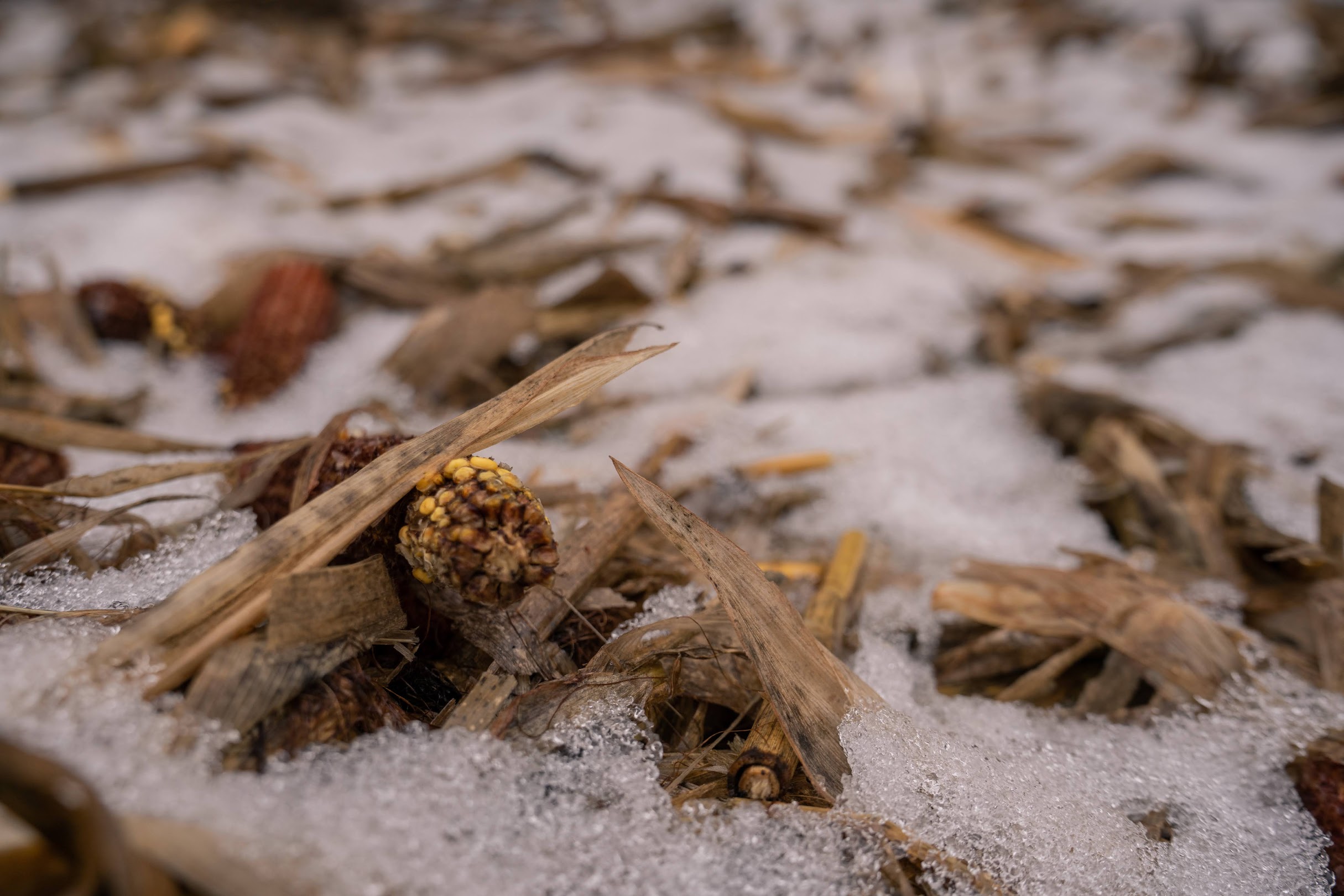
Photo by: Latifundist.com
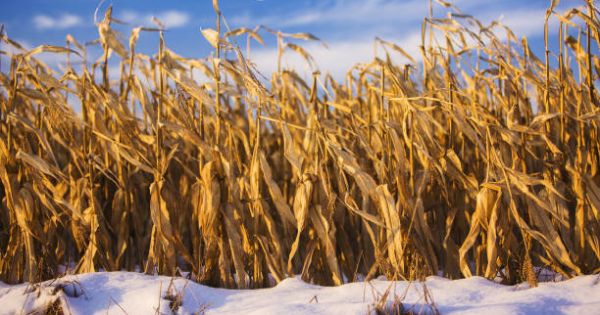
More than 2 million tons of corn in Ukraine remain unharvested, according to USDA data. Harvesting may continue until March, Deputy Minister of Economy Taras Vysotskyi forecasts.
We spoke to agroholdings AGROTRADE and TG Agro to find out how the crops wintered and whether concerns about losses and diseases have materialized.
AGROTRADE. Sumy border cluster: 910 ha of corn still in the fields
In Sumy region, 20 km from the hostile border, AGROTRADE Group left around 910 hectares of corn in the fields heading into winter. Part of the soybean crop also remains unharvested.
According to the company’s chief agronomist, Hennadii Malyi, AGROTRADE first harvested early soybeans in autumn, then moved on to sunflower and planned to return to late soybeans before switching back to corn.
However, starting from September 28, prolonged rains began, with around 200 mm of precipitation recorded in October–November. The company was unable to enter the fields for more than 50 days.

Hennadii Malyi
Chief agronomist at AGROTRADE Group
“It was unexpected even for us. No one anticipated 200 millimeters of rainfall in October–November. We understood it would be difficult, but we did not plan for corn to enter the winter unharvested.”
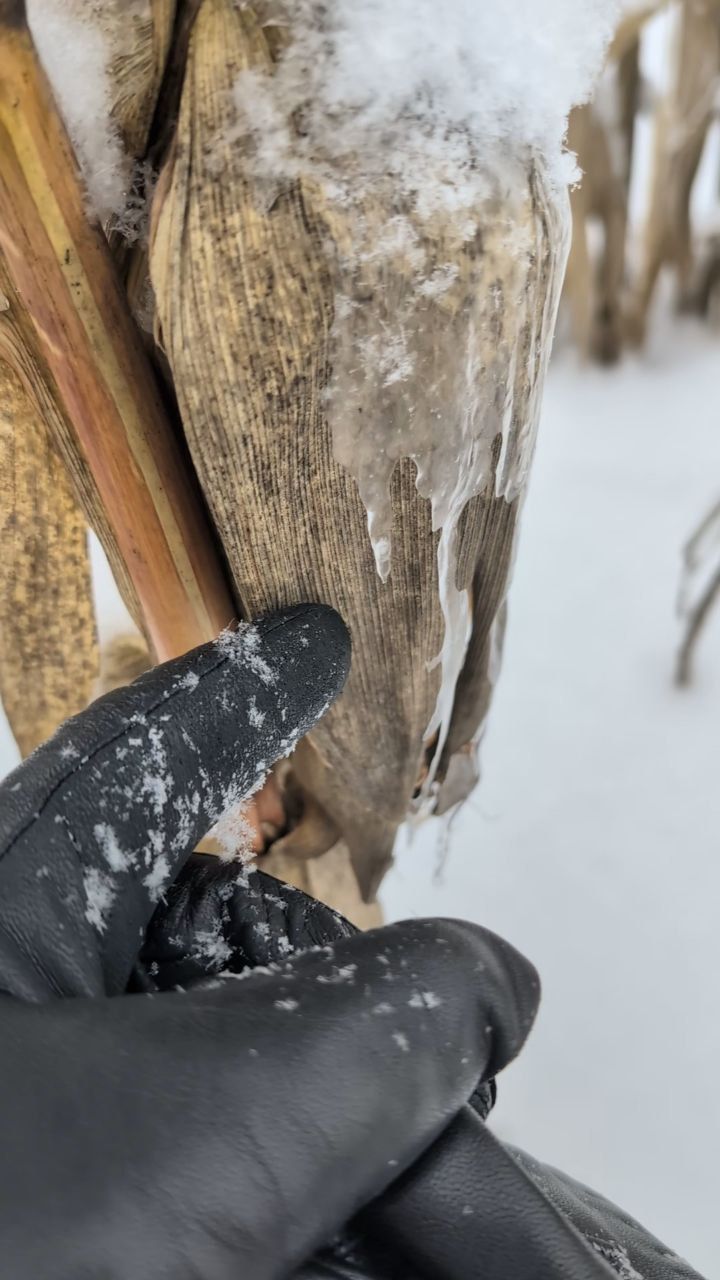
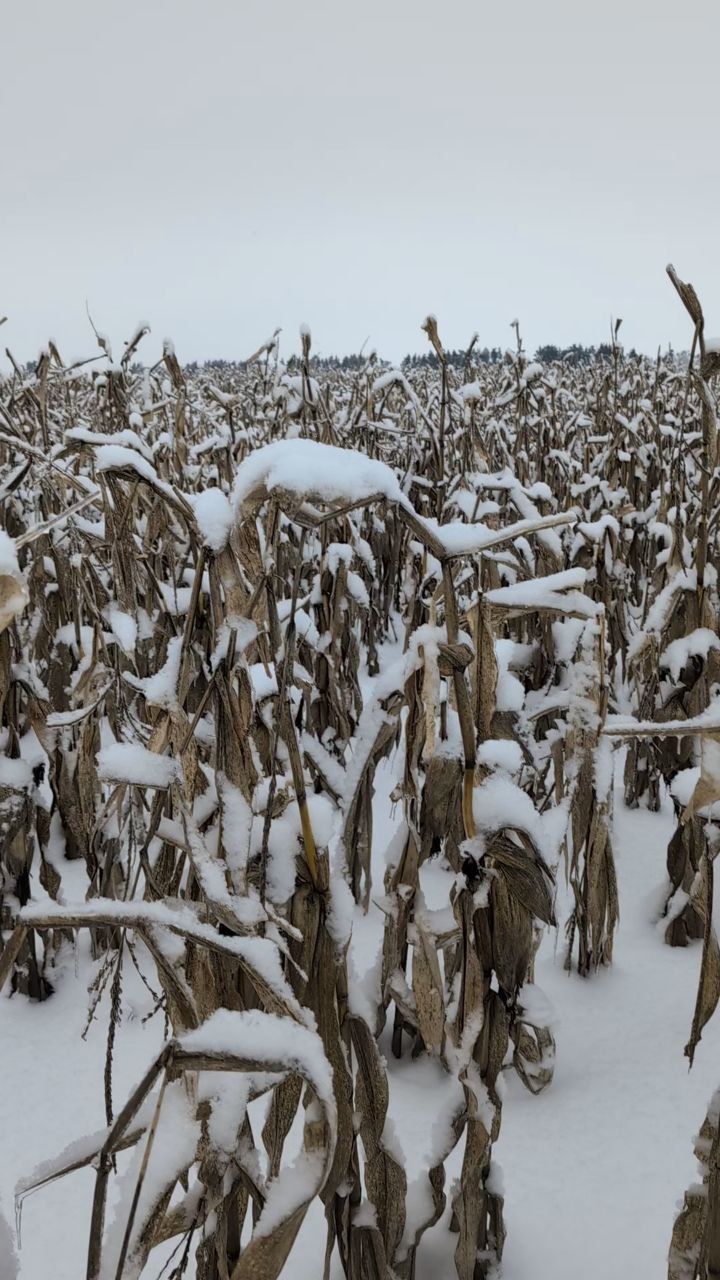
The only full-scale harvesting attempt last autumn took place on October 30, when 11 hectares were harvested at a moisture content of 32–33%. After that, the company decided to wait for frost conditions. There is no lodging, according to the agronomist, and cob attachment height is about 50 cm, which helped maintain standability even under snow cover of up to 40 cm.
However, winter harvesting presents technical challenges: due to elevated moisture levels and plant condition, the combine harvester periodically becomes clogged, slowing down operations.
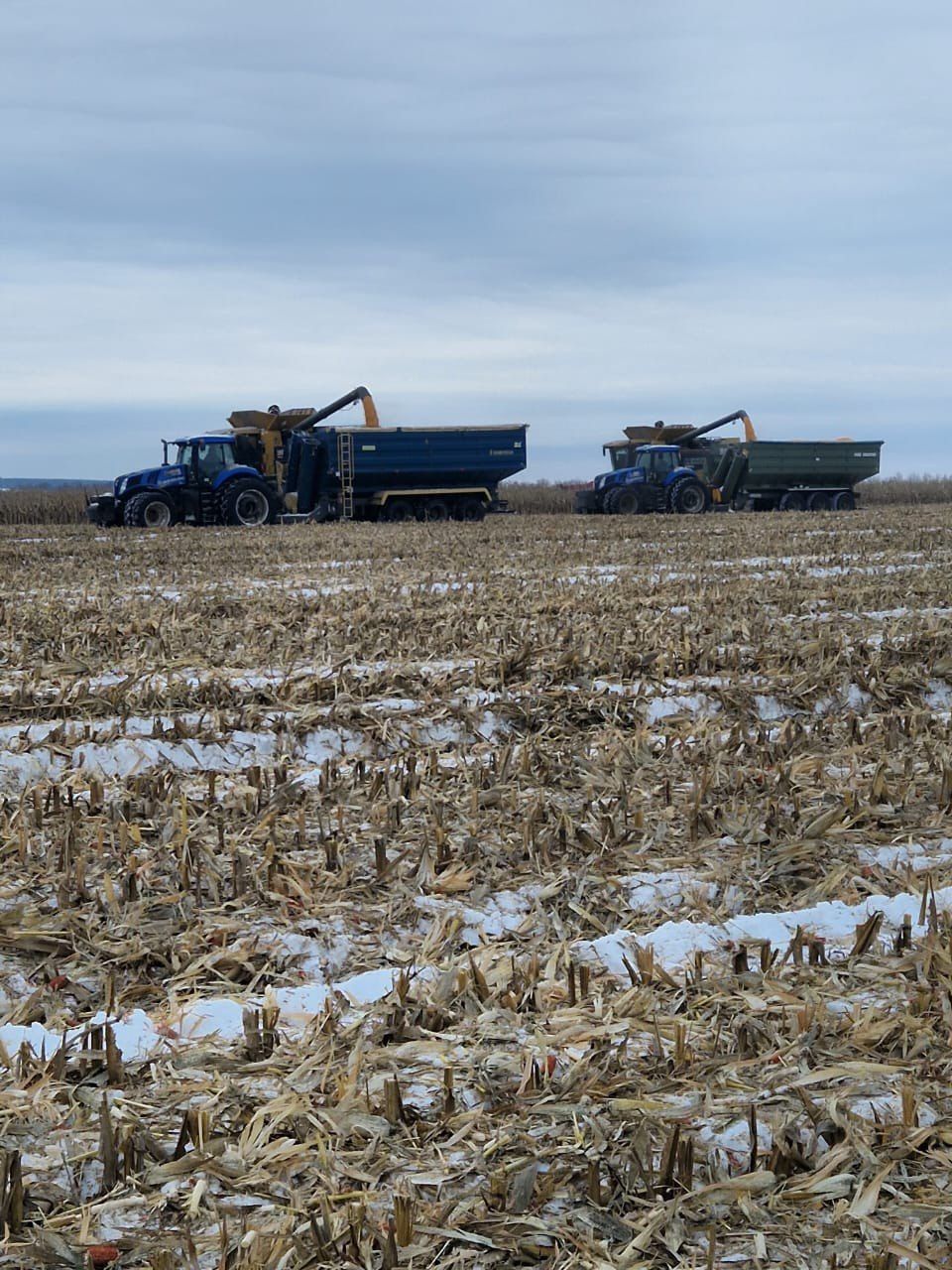
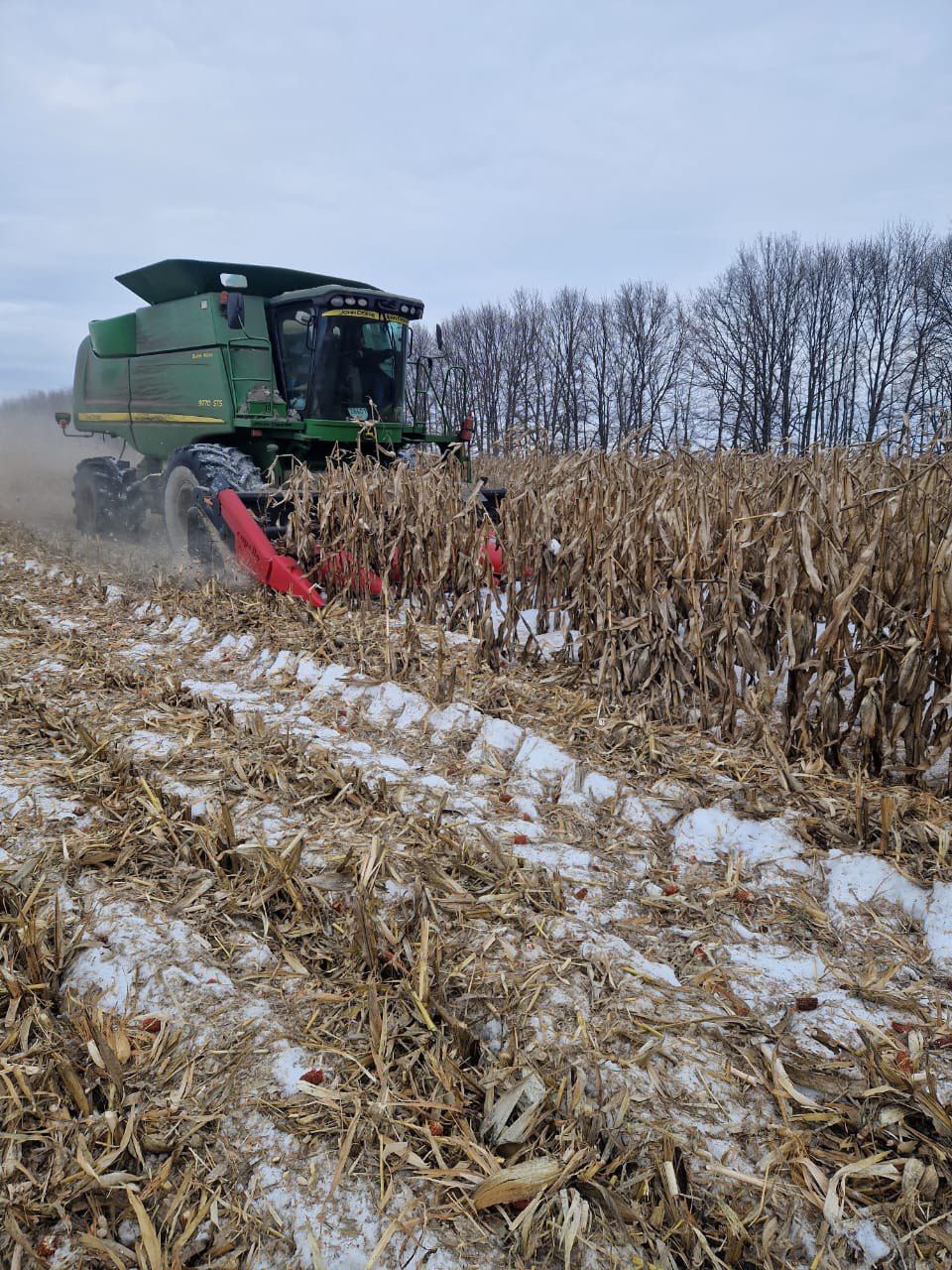
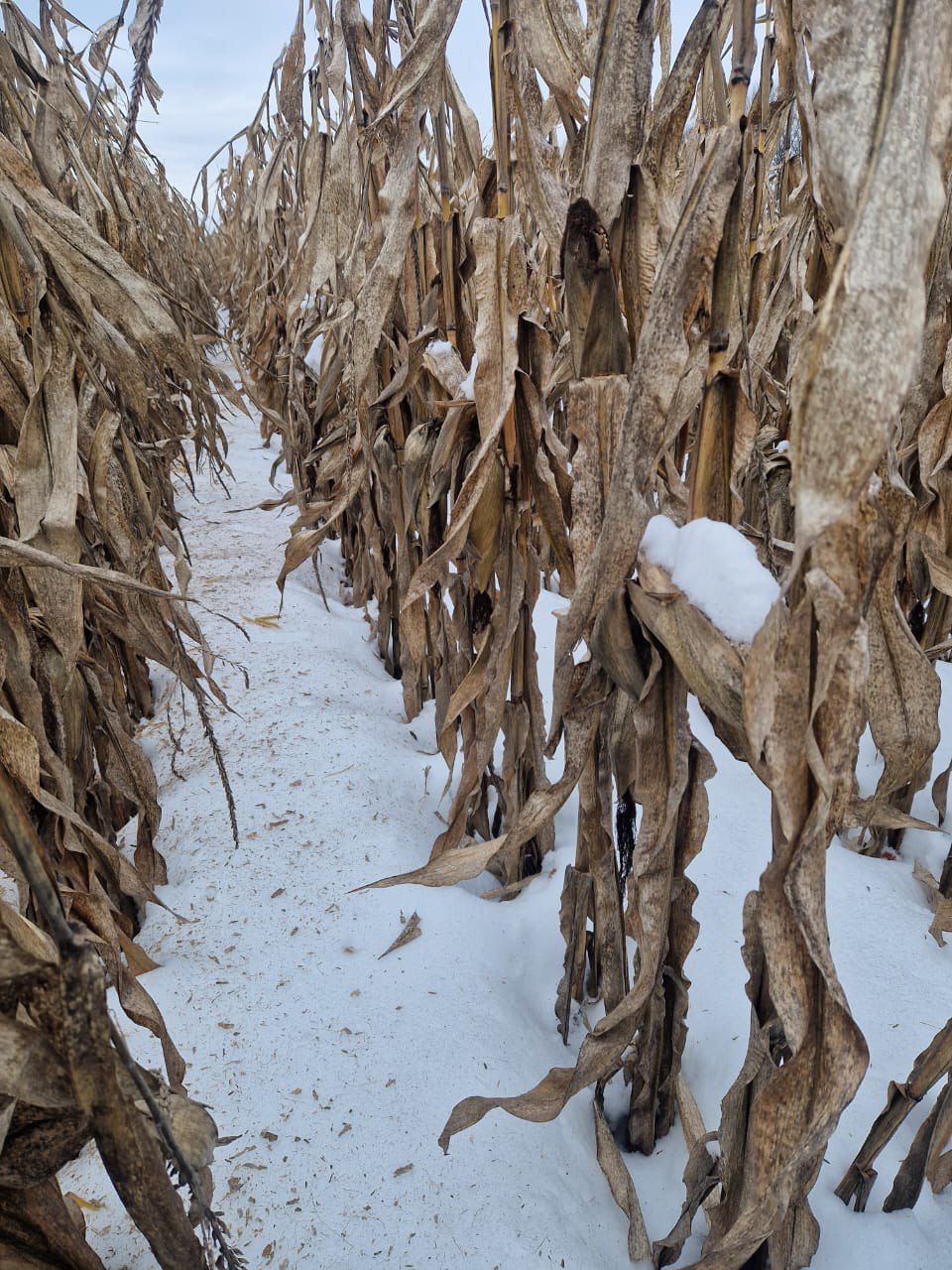
Regarding disease and mycotoxin risks, Hennadii Malyi says he sees no visible problems.
Hennadii Malyi
Chief agronomist at AGROTRADE Group
“To be honest, I don’t see any diseases. Perhaps we were lucky that the crop was preserved by frost, and biological processes did not continue.”
The main downside is technological losses of up to 3% (approximately 250–300 kg/ha) and high drying costs. With grain entering at over 30% moisture, expenses are estimated at up to UAH 3,568 per hectare, according to the company.
TG Agro: Grain dryer couldn’t keep up with the crop flow, 900 ha entered winter unharvested
This season, TG Agro cultivated around 4,000 hectares of corn in the Makariv district of Kyiv region. In autumn, harvesting began at 28–30% moisture, but fieldwork was halted by weather conditions — nearly a month of prolonged rains followed by the onset of winter. As a result, slightly more than 900 hectares of corn remain unharvested, says company director Serhii Voinelovych.

Serhii Voinelovych
Director of TG Agro
“We understood that corn moisture would be very high, so we prioritized harvesting it. But physically we were unable to collect the entire area under those conditions. Harvesting was quite intensive, yet we were limited by the capacity of our grain dryer — it simply couldn’t process more volume for storage at the elevator. We dried grain using our own facilities and also transported part of it to a third-party elevator for processing, but even then we couldn’t handle the entire crop flow at such high moisture levels.”
Using third-party elevator services at current prices, conditions, and moisture levels is essentially “work for the sake of work,” he adds. Grain dried externally barely reaches break-even, making it commercially unattractive for the company.
The unharvested corn remains in visually satisfactory condition, with no lodging observed. Current moisture in the cobs is about 20%, and after threshing, the grain is expected to reach 22–24% moisture at the dryer. Snow cover of 30–40 cm significantly complicates field access for machinery. Therefore, it is currently impossible to forecast when harvesting can resume, explains the farm manager.
Serhii Voinelovych
Director of TG Agro
“Soon there will be mud, and we still don’t know how we will access the fields and retrieve that corn. Combines will manage, but grain carts are the real question. Of course, we will harvest what remains, but I cannot say exactly when.”
At present, a significant share of damaged grain is expected — up to 10–15%. The risk of disease development and mycotoxins is currently minimal, but it exists. If corn remains in the field for an extended period at temperatures of 0°C to 2°C, the risk will increase.
During the 2022/23 season, TG Agro also left corn to winter. At that time, harvesting extended from December through March. However, snow cover was lighter, and machinery could occasionally access the fields. Ultimately, corn was harvested at 20–22% moisture. Yield losses were substantial — the crop wintered poorly due to diseases that had developed in autumn 2022.
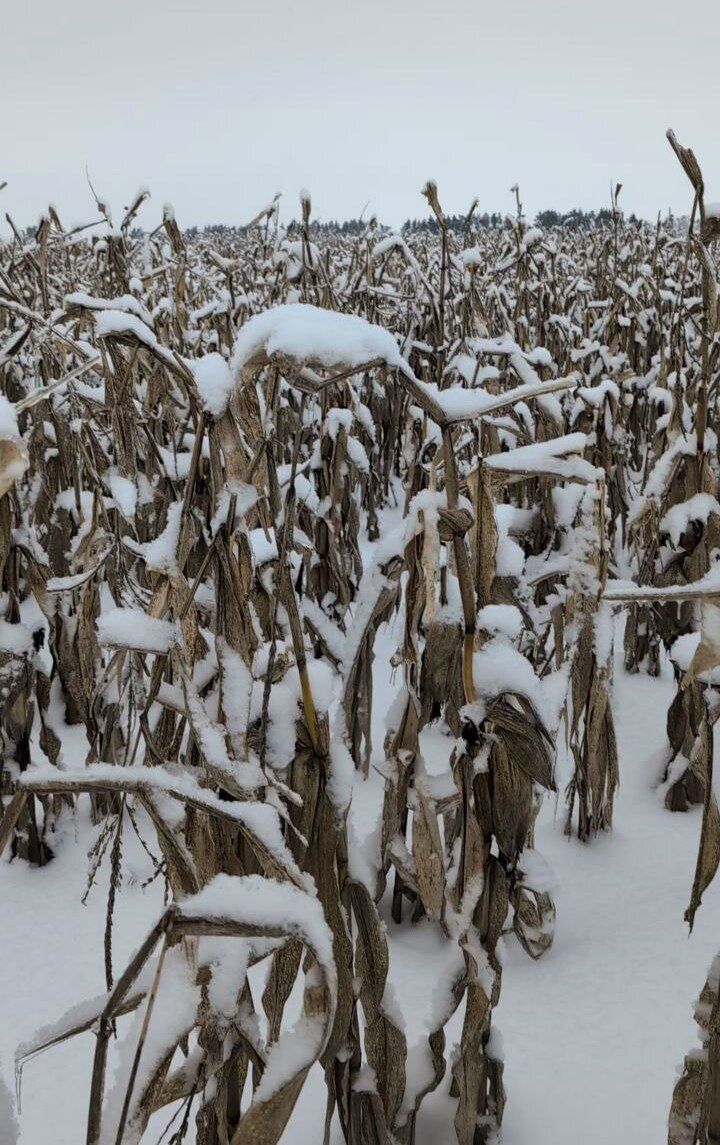
Corn harvested in spring 2026 will be sold together with autumn-harvested grain, but at a significant discount due to quality damage. It remains unclear at what price traders will accept it, given logistical constraints, port-related issues, and a smaller exportable corn volume compared to the 2022/23 season. Back then, farmers sought to sell corn as quickly as possible, whereas now traders have the flexibility to select volumes and close contracts in a planned manner.
“Preliminarily, what I’m hearing is that traders are sampling delivered corn up to the allowable limits, blending it, and then shipping it for export,” says Serhii Voinelovych.
For the next season, TG Agro will retain the same 4,000 hectares under corn in its crop rotation, with approximately the same FAO maturity index. There is rationale in seeking hybrids that better tolerate wintering in the field, but such varieties are very limited. The key conclusion from this season is the need to understand why the crop failed to accumulate sufficient growing degree units during vegetation and did not complete its development before frost set in.
Serhii Voinelovych
Director of TG Agro
“It was a climatically atypical year in terms of precipitation. We do not exclude that the next one could be similar. Some say moisture levels will normalize because they hope such problems won’t recur. Unfortunately, probability theory doesn’t work that way — such an event can repeat indefinitely. So we must draw conclusions and prepare accordingly.”
Kostiantyn Tkachenko, Oleksii Kozachenko, Latifundist.com